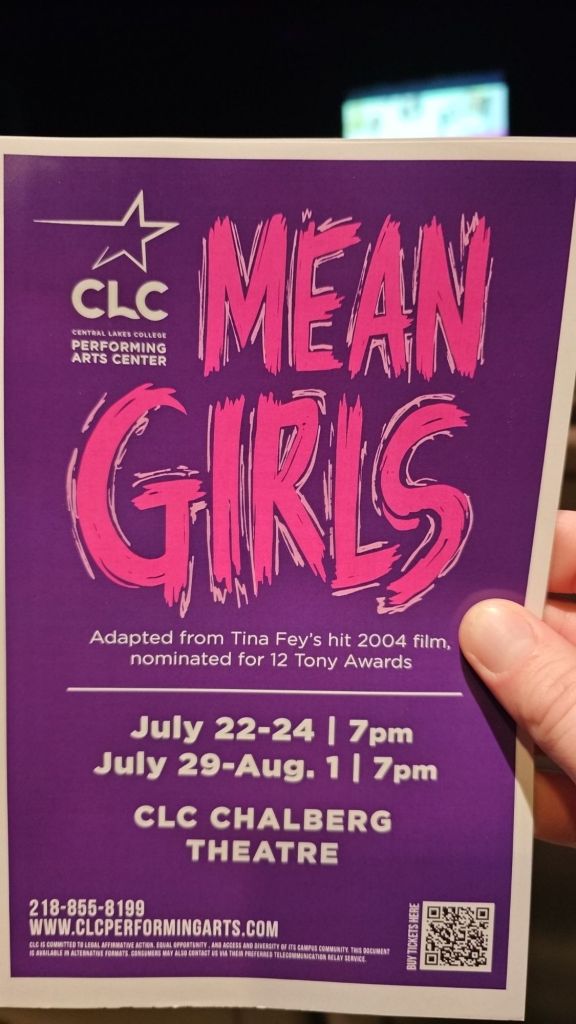
• It may be a musical comedy by genre, but there were times as I watched the Brainerd Community Theatre’s production of Mean Girls that had me so stressed out I felt like I was wriggling out of my skin. Co-directors Amy Borash and Travis Chaput are able to capture the anxieties of being in high school uncannily well. Of course, when you’re a teenager all of your emotions are magnified tenfold anyway, but in this production the emotional fallout of the shattered friendships and revealed secrets reaches a borderline apocalyptic tone. That makes it all the more impressive by how the show still manages to bring everything together with a finale that manages to be truly cathartic and moving in a way that feels truly earned.

    Mean Girls is, of course, Tina Fey’s stage musical adaptation of her hit 2004 comedy about a teen named Cady (Mekayla Van Santen), previously homeschooled while living in Africa with her parents, who enters an American school for the first time in her sophomore year of high school. There’s a fun running gag in the show where Cady, raised mostly around wildlife, compares the dog-eat-dog nature of high school social orders to the actual carnage of the animal kingdom, and she’s not too far off. She learns early on through the guidance of classmates Janise (Sarah Larson) and Damian (Noah Barnhart) that the school is run by a strict hierarchy of cliques, and above all lie the Plastics, led by the imposing Regina George. Gwendolyn Bowen was originally cast as Regina George, but as a result of a medical emergency, the role was played in the performance I watched by Marie Fahey, who originally served as the show’s intimacy coordinator. Watching the performance, you’d never suspect Fahey was a last-minute replacement – she gives Regina all of the charisma, spunk, and deviousness the role requires. She makes a great foil to Mekayla Van Santen, who brings great sincerity to the role of Cady, in a deceptively difficult role. She has to play the earnest heroine who slides into meanness without realizing she has done anything wrong. Van Santen does this so effectively you could risk missing the character arc. At one point I was considering  if the true lead of the show might actually have been Sarah Larson’s Janise, as she’s the one who convinces Cady to infiltrate and subvert Regina’s circle in the first place, and she has an entire arc of her own as the witnesses both the personal and wider consequences of her actions.

    This circle includes Natalie Topete as Gretchen, always eager to please, whether it be Regina or anybody else who enters her social circle.  She’s joined by Karen (Mehayla Van Santen), who steals scenes with her dim-bulb tendencies. Some people are said to have difficulty walking and chewing gum at the same time – for Karen, standing and breathing simultaneously seems to be pushing her limit. Cady initially seems if not charmed by Regins at least impressed by the power she holds amongst her classmates (the song “Apex Predator” ties this to the aforementioned wildlife theme) and soon finds herself spending more and more time with them. She also finds herself drawn to Aaron (Leopold Famoso, charming and endearing) a cute guy in her calculus class. Her song “Stupid With Love” is a very charming expression of an awkward crush, one that becomes dangerous when she learns Aaron is Regina’s ex. Not wanting to risk her friendship with Regina by making a move but still wanting to spend time with Aaon, Cady downplays her own mathematical abilities in order to get him to tutor her. But soon Regina learns of Cady’s interest in Aaron, and when Regina takes him back at a Halloween party, Cady becomes driven to finally bring her down.
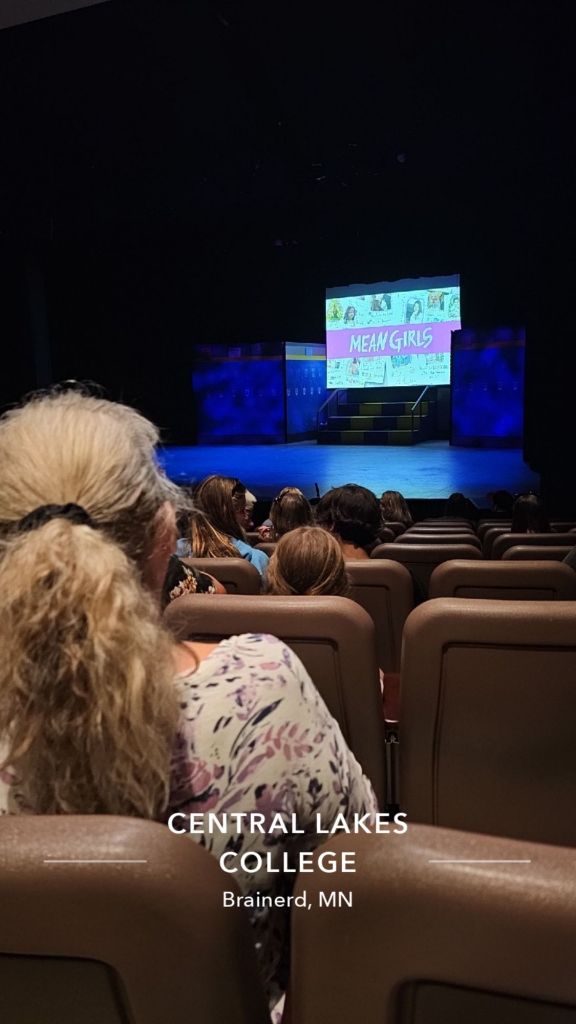
    This is a faithful adaptation of the film, and Tina Fey updated it by incorporating social media into the story. There’s even a very funny song in Act II called “Stop” where Damian encourages Cady to hold back on the posting. This number and a few other places in the show had some audio imbalance, with the sound of the music and dancing drowning out the dialogue, but it only mattered briefly. You can always count on fun choreography from shows Amy Borash is involved in, and this one is no exception. There’s energetic dance numbers throughout and even some fun fight sequences. It’s all very elevated and very funny, but as the show takes pains to point out, the issues surrounding bullying are very real. Everybody’s gotten a thrill of taking someone down a peg, and everybody’s faced the pain of being targeted (ESPECIALLY in the age of social media). A show as goofy as this isn’t going to change the world, but it’s at least nice to know it takes its subject matter seriously – there’s even a song given to Regina’s mother (a character who was a total cartoon in the movie) reminding the audience that despite her pretense of being a “cool mom” it is still hard work to be a parent.

    Mean Girls is funny, exciting, and by the end surprisingly moving. I didn’t expect to have tears in my eyes while watching this, but as the cast performed “I See Stars” it truly created an emotional moment that brought it all together. It made being reminded of all the anxieties that came with high school worth it.

    MEAN GIRLS plays at the Chalberg Theatre at Central Lakes College through August 1st
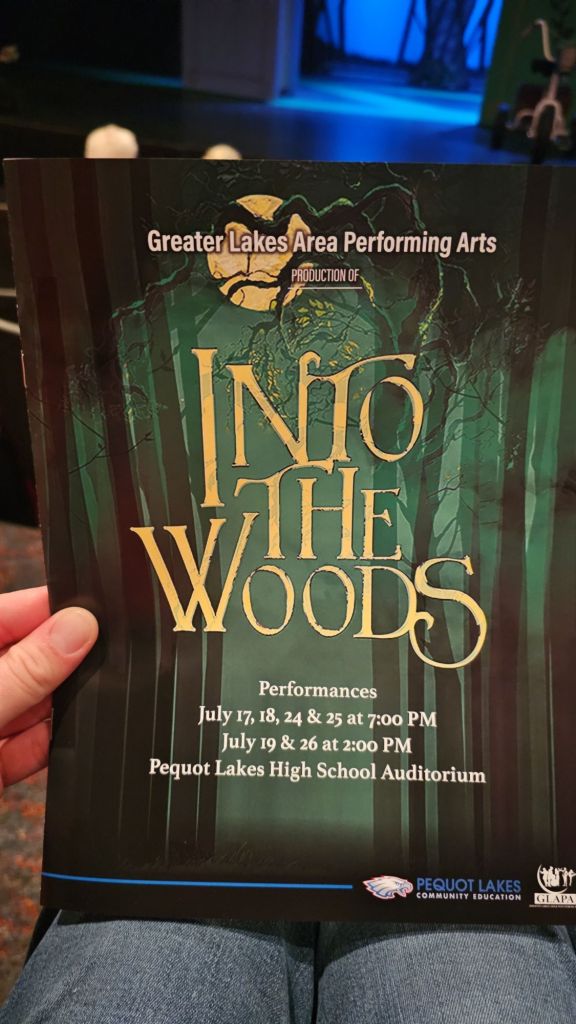
  • Into the Woods is material that is just about as close to perfection as you can find in the American theatre canon. Between Stephen Sonheim’s unforgettable music and James Lapine’s tightly-constructed and witty book, I’ve often said almost any group with a baseline level of talent and resources can put on a satisfying show. This new production from the Pequot Lakes Community Theatre (aka Greater Lakes Performing Arts) was hampered by a number of technical flaws and pacing issues, but thanks to a game cast and the underlying strength of the material it still managed to ultimately make for a satisfying evening.

    The issues started early, when the opening number was paused due to an error involving the musical backing tracks. This eventually led to the whole thing being reset, but even the second go-around had an extended pause in the song resulting from actors missing their cues. Credit should go to Jayley Andresen as Red Riding Hood for getting the action moving again – the character of Red often sets the rhythm for productions of Into the Woods anyway, so she obviously knew exactly what to do to hit her cue and kick things into gear.

    Thankfully the technical issues during the rest of the show weren’t as noteworthy, although there were some issues with the sound and moments when the cast’s vocals didn’t quite synch up with the backing tracks. I recall there being similar issues when I saw Pequot’s productions of Shrek: the Musical and Annie, so maybe it comes with the venue. Outside of technical issues there was the occasional some lag in the pacing, most notably with “Giants in the Sky” which normally begins immediately after “First Midnight” but here there was a gap between songs as the actors moved into their paces, which upended the pacing a little bit. Thankfully Avi Trujillo as Jack made the song her own & brought new dimensions to it through her vocals.

    The cast of Into the Woods

    The cast as a whole all did well to rise up to the occasion, and with a show as well-balanced as Into the Woods it ensures that just about everyone had a standout moment. Brynn Bestland brings a smart earnestness to the role of Cinderella, while the always entertaining Baird Brutcher brings a unique and delightful physicality to the Wolf before moving on to playing Cinderella’s Prince as a man convinced he’s actually the hero of the story, even though his actions show him to be anything but. As the Baker, Sam Kalthoff is initially maybe too believable as a passive man who relies on his wife for everything (of course it’s probably easy to seem passive in comparison to Carrie Walker as the Baker’s Wife who steals scenes with her forceful personality) but especially in the second act Kalthoff digs deep into the Baker’s anger and brings new dimension to the character. I also appreciated how performers in the supporting cast like Erin Caswell, Abigail Porter, and Stephanie White brought a lot of character and personality to Cinderella’s mother, Rapunzel, and The Steward – these are smaller supporting parts that sometimes risk getting swallowed up by the rest of the story, but they make the characters real and distinctive.

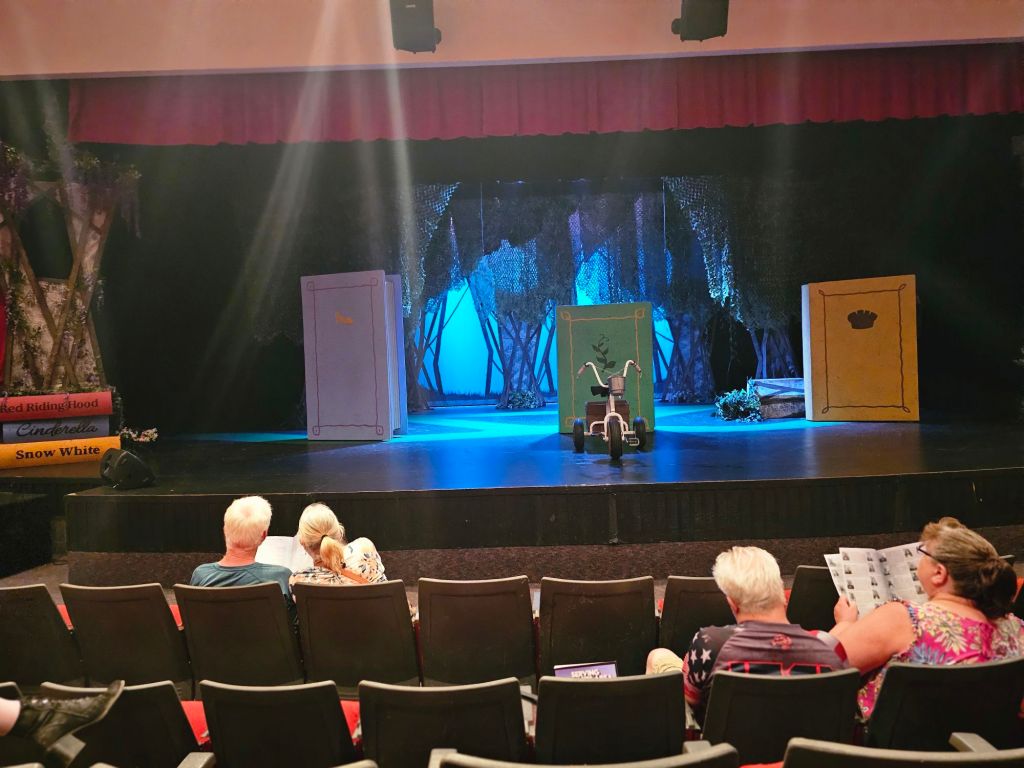
    While I may have had issues with the technical execution and pacing of this production, I did enjoy the look and physical presentation of it. Director Jennifer LaRee Anderson and set designer Tim Leaglend build a layered set that has the main characters emerge from giant storybooks that are wheeled out onto the stage, with a series of trees in the background to represent the woods themselves. I also enjoyed the choice to have human actors play Milky White, the goose, and the harp (Anderson must have seen the Guthrie’s 2023 production of Into the Woods, as both it and hers use an actor on a tricycle to play Milky White). It’s a small touch, but it does give the show more personality.

    Thankfully, the second act had many fewer technical issues and went much smoother as a result. There were still some directorial and pacing choices I found odd but by the end I because as caught up in the story as I always do when watching this show, and Sonheim’s finale continues to be a rousing, emotional end that never fails to bring a tear to my eye. This production really is a tribute to the power of the underlying material, and how a talented cast will always be able to make a good show out of it.

    INTO THE WOODS runs through July 26 at Pequot Lakes High School Auditorium

  • Big Shark is Tommy Wiseau’s latest exploration of the joys of male friendship and how women are the biggest threat to it. Also there’s a big shark terrorizing New Orleans.

    One of the biggest concerns that comes with a filmmaker like Wiseau following up a movie as notorious as The Room is that he would start acting like he was in on the joke. Trying to wink at the camera and play into the reputation he’s cultivated in the years since The Room became a phenomenon in bad movie circles would likely be insufferable. The best thing that can be said about Big Shark is that Tommy Wiseau’s earnestness is still wholly present. Much like The Room was his attempt to create a Tennessee Williams-esque melodrama, Big Shark is an earnest effort at making a disaster-horror movie, although Wiseau still can’t help but soak the proceedings in melodrama along the way.

    Big Shark follows three New Orleans firefighters (Isaiah LaBorde, Mark Valeriano, and Wiseau himself) who have to save the city from a series of deadly shark attacks. In between – and sometimes during the shark attacks – they still have time for dance parties, basketball, day drinking with friends, and arguments with their girlfriends (who in the grand tradition of Wiseau’s films, are all obnoxious harpies). Casting himself as a firefighter allows Wiseau to indulge in another of his trademarks: endless self-aggrandizement. People are constantly telling our heroes how heroic they are, and hardly a scene goes by without someone reminding Wiseau that he’s a really great guy. The interplay between the firefighters (all of whom live in the same house, presumably to save on the movie’s budget) is very reminiscent of The Room in its idealized portrayal of male friendship alternated with harsh, angry arguments. What’s weird is how abruptly the tone shifts from friendly and angry and back again, often in the same scene or even the same conversation. One thing that can be said, in contrast to The Room, is that despite the inconsistent writing and acting I didn’t find myself asking why these guys were friends in the first place – if nothing else, the bond they have as firefighters comes through.

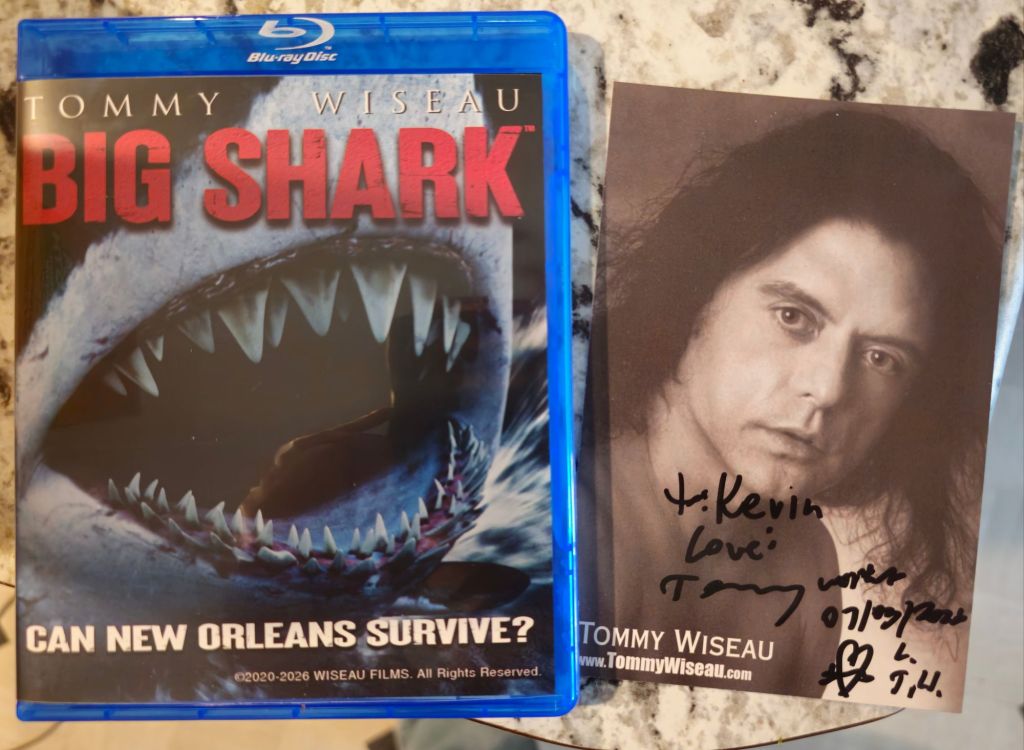
    Yes, this actually exists.

    The same thing can’t be said about the relationships between the men and their girlfriends, though. The arguments between them, especially between Wiseau’s Patrick and his girlfriend Sophia (Ashton Leigh, an old pro at this genre, having appeared in such films as Mississippi River Sharks, Ozark Sharks, Swamp Shark, and Great White Waters) are among the most insufferable parts of the movie; much like in The Room these arguments and conversations constantly repeat very strangely worded turns of phrase (most notably “you have a delusional mind!”) like a Harold Pinter play translated by Martians. What makes these scenes so frustrating is that they contribute almost nothing to the plot outside of manufacturing conflict between the characters, something that shouldn’t be necessary considering there’s a big shark on the loose.

    The shark scenes come fast and end just as abruptly, with the beast created through SyFy-grade CGI as it flies down flooded streets of New Orleans munching away at random civilians. The streets flooding with water is used as a way of foreshadowing the shark attacks and there’s an oblique reference to the city’s vulnerability to flooding in the wake of Hurricane Katrina, but there’s no real effort made at explaining where either the flooding or the shark came from. The only scenes that contain any suspense are when our heroes are trying to find the shark’s breeding ground so they can take it out with a pig stuffed with dynamite (the extended sequence where they procure the porker from a local barbecue place has to be seen to be believed – it plays like a Tim Robinson sketch). They’re also the only sequences where the shark doesn’t immediately devour whatever is in front of it (presumably the shark is a lot more effective at killing when flying through the air compared to when it is actually underwater). Like many a b-movie monster, the shark seems to vary in size from scene to scene. Wiseau describes the shark in dialogue as being thirty-five feet long, but it grows and shrinks depending on if it needs to navigate the streets, prowl the depths, or attack a yacht or suspension bridge (yes, that happens).

    Despite all of this, Tommy Wiseau’s technical skills do seem to have improved since The Room, although this could be a result of having more accomplished technicians below-the-line (Christian Schulz, one of several credited cinematographers, is a director in his own right and editor/colorist Hunter Thomas has worked as a technician and camera operator on many movies, including the New Orleans-set Renfield.) We get some expected obvious use of green screens that seem like part of Wiseau’s visual style at this point, but the location shooting in New Orleans is actually not bad. Wiseau’s affection for the city and the people who live there definitely comes through.

    This is clearly a movie meant to be seen with a rowdy crowd – that’s how most people have seen it since 2023, in event screenings often hosted by Wiseau himself (say what you will about him, but the man clearly knows his audience). I watched it at home on its newly-released Blu-ray, which is admittedly probably the least ideal viewing situation. As a result while there were plenty of unintentional laughs, after nearly two hours of it I ended up feeling like I was banging my head against the wall. This is a fascinating movie – like The Room it seems to transcend normal classification of “good” or “bad” or evem “so bad it’s good”. If you’re a fan of The Room or are a mad movie aficionado this is definitely worth checking out, but make sure you’re in the right mood.

  • Over the last few years, there’s been a trend on various forms of social media of women taking on the role of “tradwife”, where they relegate themselves to, and presumably find fulfillment in, traditionally conservative gender roles of the woman as homemaker and nurture. Laura Wade’s play Home, I’m Darling may have preceded this trend by a few years when it premiered in Wales in 2018, but it nonetheless plays like a deliberate deconstruction of the idea. This production at Lyrics Arts, under the direction of Scott Ford, is a funny, well-acted, and ultimately surprisingly moving portrait of a marriage where nostalgia is used to try to ward off the problems of the world.

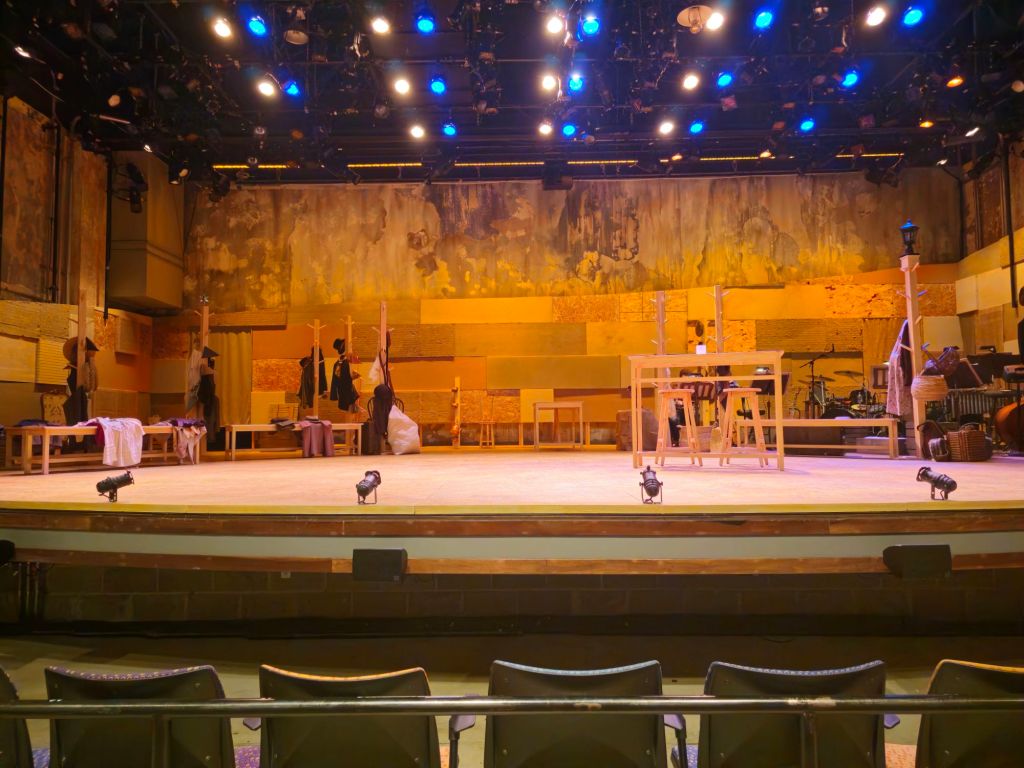
    Kendra Mueller and Kyler Chase play Judy and Johnny, a middle-class British couple who live a near-perfect representation of wholesome 1950s sitcom life, with Johnny heading off to work every day with his suit and briefcase and Judy serving as the homemaker. The issue is, this isn’t the 1950s – it’s the present day, and Judy and Johnny are deliberately aping the 50s as a lifestyle choice. A lot of comedy comes from their interactions with others such as the family friend Fran (Siri Hellerman) who is proud of her job but more than a little tempted to join in the facade and Judy’s radical feminist mother Sylvia (Patti Hynes-McCarthy) who is gobsmacked her daughter would choose to live what she sees as a regressive existence. But even the comedic scenes between them have an underlying sense of tension. Judy staying at home and maintaining the house with its period-accurate 50s appliances (represented in a colorful and meticulously-realized multi-layer set designed by Ren Edson) means she doesn’t get a lot of interaction with the real world, and you almost get the sense Judy is trying to seal herself off, until the real world starts coming for her. Fran tells Judy that she saw Johnny having lunch at the local shopping center with a young woman, which Judy tries to brush off but can’t quite. On top of that, it costs a lot of money to live the life of a 1950s sitcom, and the couple are counting on Johnny receiving a promotion soon in order to stay comfortable and happy.

    The more Judy and Johnny find themselves in contact with the rest of the world, the more their own lifestyle begins to fray. One turning point is a scene where they invite Johnny’s new boss over for drinks. The boss in this case is Alex (Izzy Maxwell), the woman Johnny was seen having lunch with. This creates an uncomfortable parody of the typical sitcom plot, laced with tension as the couple try to ingratiate themselves with her while also explaining their choices to live in the 50s to this fully modern woman, all while Judy tries to gauge exactly what the relationship between Johnny and Alex is. Another is when Fran’s husband Marcus (Charlie Morgan) is suspended from his job due to allegations of sexual misconduct, which of course was the sort of thing that just wasn’t talked about in the 1950s.

    A lot of credit should go to director Ford and his cast for maintaining a tonal balance here – this is a show that could easily go wrong. Play the sitcom parody too broadly and the real-world stuff doesn’t wouldn’t fit. Lean too hard into the dramatic material and the sitcom parody would either come across in bad taste or like some kind of cult. But what we get is a very funny show that nonetheless carries the effective dramatic throughline of a couple trying to find ways to keep their marriage healthy. Mueller and Chase have excellent chemistry, and you truly get the sense that they care for each other. The show’s set transitions go a long way towards maintaining the comedic elements of the show’s tone, with the performers literally dancing as they move props and pieces on and off. There’s also a barnstorming moment in the second act where Sylvia unloads on Judy and Fran in an extended monologue about what life in the 1950s was really like, not the sitcommy version Judy has been living (“the 50s didn’t even look like this in the 50s!”), reminding them of all the ugliness and difficulty that the aesthetics of the period tried to hide. It’s such a standout moment for Patti Hynes-McCarthy (one that generated spontaneous applause from my audience) that you almost expect the show will wrap up soon after – after all, what else it there to say? But the actual ending of the show is still a while coming, and it comes in a surprisingly straightforward way: Judy and Johnny sit down and talk. No punchlines, no plot contrivances, just two people who love each other trying to figure out how to make it work. It’s such a mature and thoughtful way to wrap things up, and I found myself genuinely moved.

    I had almost no knowledge of Home, I’m Darling going in, and even then it was vastly different from what I was expecting. But what I got was ultimately more complicated, challenging, and probably more satisfying than I could have possibly anticipated.

    HOME, I’M DARLING plays at Lyric Arts through June 21st

  • My Ántonia, a new musical having its world premiere at Theatre Latte Da in Minneapolis, is a triumphant production filled with emotion, joy, and humanity. It’s a story that speaks effortlessly about immigrants, the obstacles women face in society, about masculinity, class divides, even art – and it’s all wrapped up in a love story told through gorgeous music and performed by a cast of some of the most talented performers in the Twin Cities.

    Adapted from the novel of the same name by Willa Cather (one I am personally unfamiliar with), the show tells of a pair of families in 19th-century Nebraska, told through the memories of Jim (Tom Reed), reminiscing about his past to his hard-drinking author friend Willa (Em Rosenberg). Most of his memories revolve around Ántonia, the daughter of a family of Czech (or “Bohemian”, as they’re referred to in the show) immigrants who live close to the farm where he lives with his grandparents. This sort of framing device – taken from the novel – is something that can often feel contrived on stage, but as written in Noah Brody’s book and directed by Jessie Austrian it works surprisingly well, mostly because the two of them aren’t just passive narrators. Jim and Willa don’t just tell the story, they also offer commentary as it goes along, with Willa being unafraid to ask Jim questions or confront him about his mistakes. This more dynamic form of narration also partially takes the curse off of a flaw so many stories like this have: that Jim as the POV character is significantly less interesting than Ántonia herself.

    Both Jim and Ántonia are played by three different actors over the course of the show, all seamlessly working together to portray the full span of the lives of these two very different people who nonetheless have a deep and abiding connection. Maddox Tabalba and Lillian Hochman as the youngest versions of the characters give some of the best performances by young actors I’ve seen on stage in recent memory. Both of them get to showcase the whole range of emotions that come from childhood, from joy and silliness to strife and heartbreak. They’re so good that I would have liked to have seen the entire show be built around them. The way the show transitions between the young and adult Ántonia (Sara Masterson) is a remarkable feat of theatre that sweeps you up so completely in the emotion of the moment that you practically forget you’re seeing two different people. The accent work and mannerisms match uncannily well – you truly feel like Ántonia’s spirit has moved from one performer to the other.

    Credit should also go to Will Dusek who plays the adult Jim. He gets the most complicated version of that character of the three, often having difficulty processing his own feelings for Ántonia, which sometimes leads him to lash out in a way that hurts them both. This is in no small part because of the complicated issue of gender dynamics on the prairie. Ántonia shows herself to be as strong and hard-working as any male farmhand, with a spunky and assertive personality to boot. She knows what she wants and isn’t afraid to seek it out. Jim by contrast is more bookish, quiet, and seemingly content to follow the path set for him by society. He looks at Ántonia and yearns not just for her romantically but also for her independence. But there are moments when Ántonia’s independence gets her in trouble – she’s still a woman in turn-of-the-century Nebraska, after all, and reputation matters a lot. There are men who she finds herself linked professionally or romantically to that people in town know won’t work out well for her, but either because of her own stubbornness or because of a reluctantance of people to disrupt the town’s dynamic by speaking up, Ántonia stays with them, at least until she can’t anymore. There’s one key scene where Jim tries to protect Ántonia from her shady employer, and it goes wrong in such a horrific way that it drives a wedge between them that he fears might never be fixed.

    All of this would be an emotional and heartrending story all on its own, but this is a musical, with an indie/folk flavored score composed by The Kilbanes (Lucille Loertel and Drama Desk award-nominated for their previous musical Weightless) and music direction by Jason Hansen, and it’s beautiful. Every song fits the setting and mood perfectly, from the joyful “Name, What Name” and “Hired Girls” to the mournful “Lay Your Burden Down” and suspenseful “Snake in the Garden”. Contrast this with something like The Great Gatsby that revels in its jazz age setting but has a score that sounds like any number of other contemporary musicals. In My Antonia the songs, whether they serve to move the story forward, deepen our understanding of a character, or simply set the mood, are always a joy to listen to. This is helped, obviously, by being performed by such a wonderful cast. Aside from the previously mentioned Reed, Masterson, Dusek, and Rosenberg, the cast also includes such local mainstays as Sally Wingert, Bradley Greenwald, Emily Gunyou Halaas, and Anna Hashizume. You can tell they all care deeply for this material – it creates an infectious feeling of love that emanates from the stage. There’s always a sense of joy that comes from discovering something new and special, and that’s what I felt through every minute of My Ántonia.

    MY ÁNTONIA plays at the Ritz Theatre in Minneapolis through July 12th

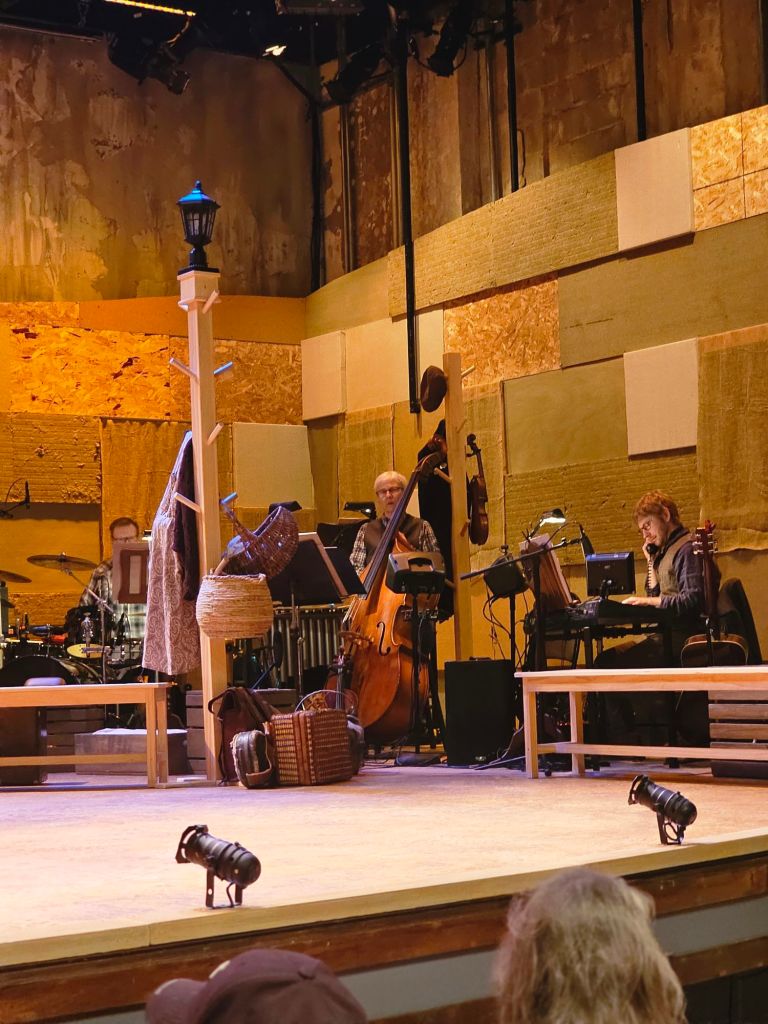
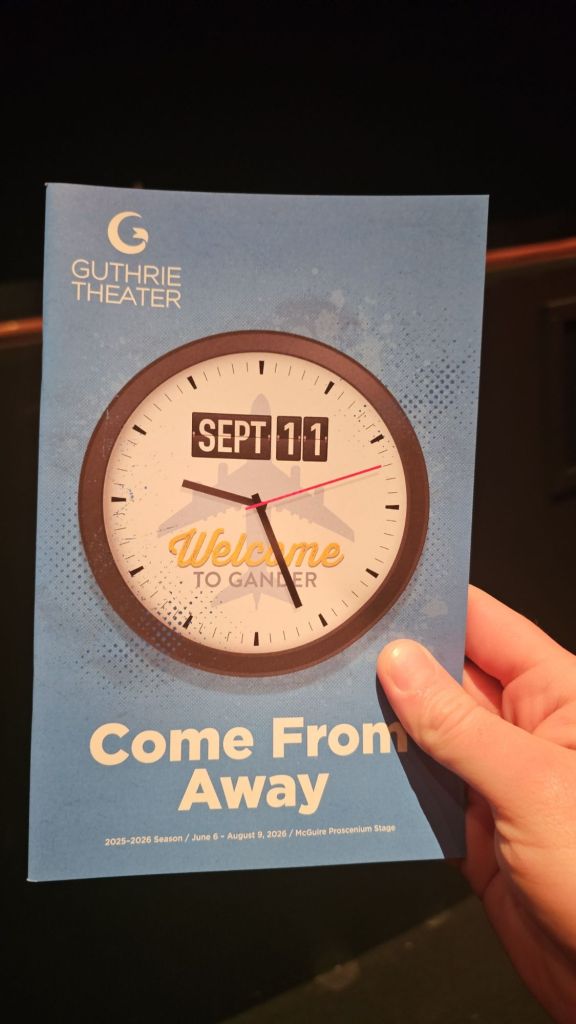
  • Since it was made available for licensing, Irene Sankhoff & David Hein’s seminal musical Come From Away has become one of the most produced shows in the country. In Minnesota alone there are a half-dozen productions planned over the next two years or so. With so many planned, what is it that makes Come From Away so special, and does it risk becoming overexposed?

    Thankfully, if the Guthrie Theatre’s new production is anything to go by, Come From Away is the sort of material that will never lose its power. This is a dynamic, life-affirming show that reminds you of what is best about humanity. With fast pacing and beautiful music combined with grounded, relatable performances, this is the sort of show that doesn’t just show you good people doing good things – it makes you want to be a better person yourself.

    Come From Away is based on the true story of when in the wake of 9/11, a number of airliners were redirected to a small island in Newfoundland to stay while authorities determined whether or not it was safe to continue to fly. The passengers found themselves embraced by the local population who pooled their resources and skills in order to provide shelter and comfort for these strangers from around the world who were stranded in the middle of nowhere, not knowing when they’d ever return home.

    Under director Kent Gash an ensemble of a dozen actors play hundreds of characters, representing a cross-section of the thousands of stranded passengers and the hundreds of locals who helped them. The passengers include such varied personalities as the first woman to serve as a captain for United Airlines, an Englishman who discovers the possibility of romance with a fellow passenger from Texas, a woman from New York desperate to reach her firefighter son, and an Egyptian man who is viewed with hostility due to his Muslim faith but only wants to health. Among the Newfoundlanders are the local mayor, a reporter for whom 9/11 was her first day on the job, a teacher whose school is turned into a shelter, and a veterinarian who jumps to action when she realizes there are probably animals aboard some of the planes. The cast does such an impeccable job of embodying these characters that it would almost feel like a disservice to single out any one over the others – they all work together like a well-oiled machine, weaving in and out of the story and never missing a beat in the process, even when the production itself had occasional audio issues on opening night.

    Choreographer Bryon Easley does a remarkable job moving and organizing the cast – the entire ensemble is on stage for most of the show, and most everyone has something to do at any given time. Even during the large-scale sequences such as a party at the local lodge the reality is never broken – at no point do you forget these are just normal people,  with real foibles and flaws, doing what they can under extraordinary circumstances. When they dance, it feels as silly and spontaneous as any other time you or your friends have started to dance at a party. Nothing is over stylized, nothing feels out of place. What we’re seeing are the memories and emotions of real people, embodied through music, and it is executed extraordinarily well.

    By the end, we witness a bittersweet departure for the passengers that leads in to a rousing finale set during the anniversary, where we see how the stories of the various passengers and locals turned out. Not all of it ends happily – nothing ever does – but you understand that for these people, they’ll always have this moment – a period of five days that reminded them that there are good people in the world, and that when it comes right down to it, we can and will do what we can to help each other out.

    This is a lovely story of people working together and embracing their humanity for the sake of basic decency and the greater good – it’s easy to see why artists are eager to remind people that that is possible these days. Not to mention, at a time when relations between Canada and the United States have become strained due to the actions of a certain idiot in the White House, it’s nice to be reminded of a period when cooperation and belief in the common good transcended all. The Guthrie’s Come From Away is an absolute must-see… it is going to be one of the most impactful theatrical productions of the year.

    COME FROM AWAY plays through August 9th at the McGuire Proscenium Stage at the Guthrie Theatre.

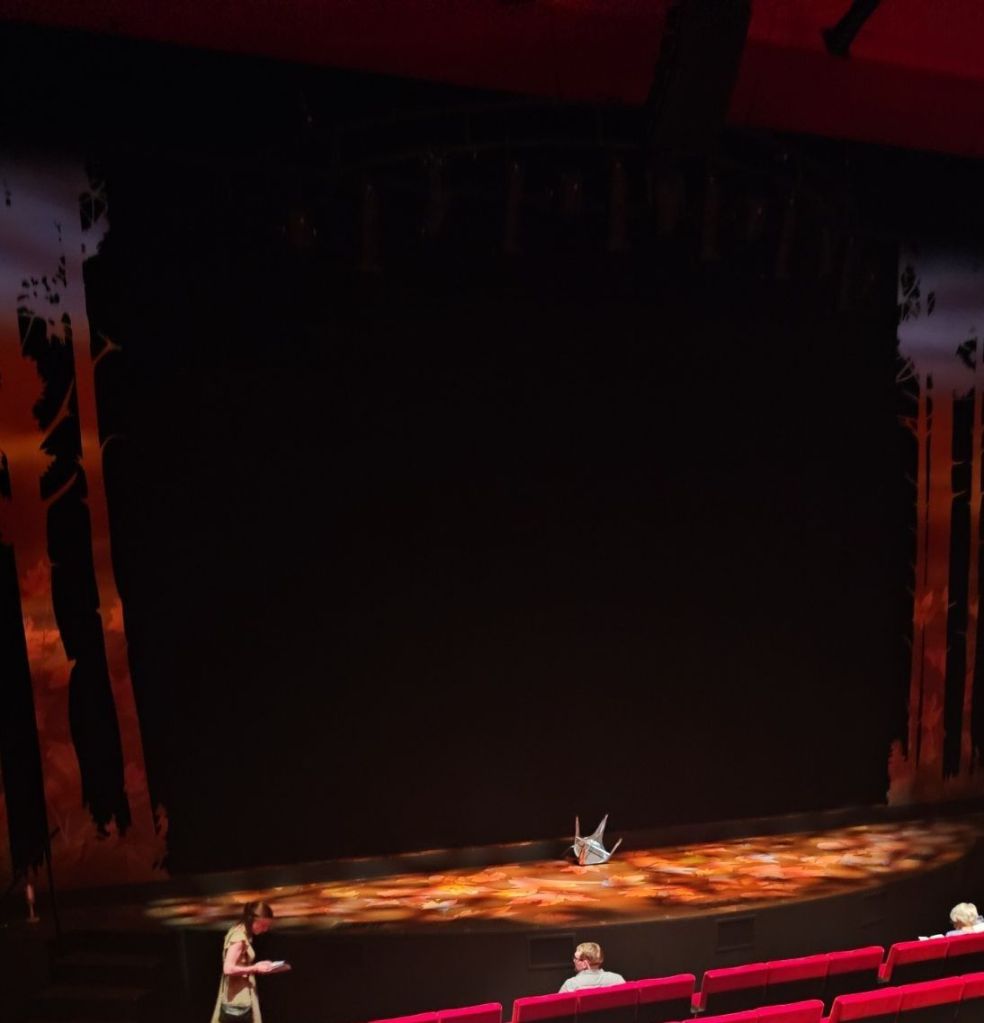
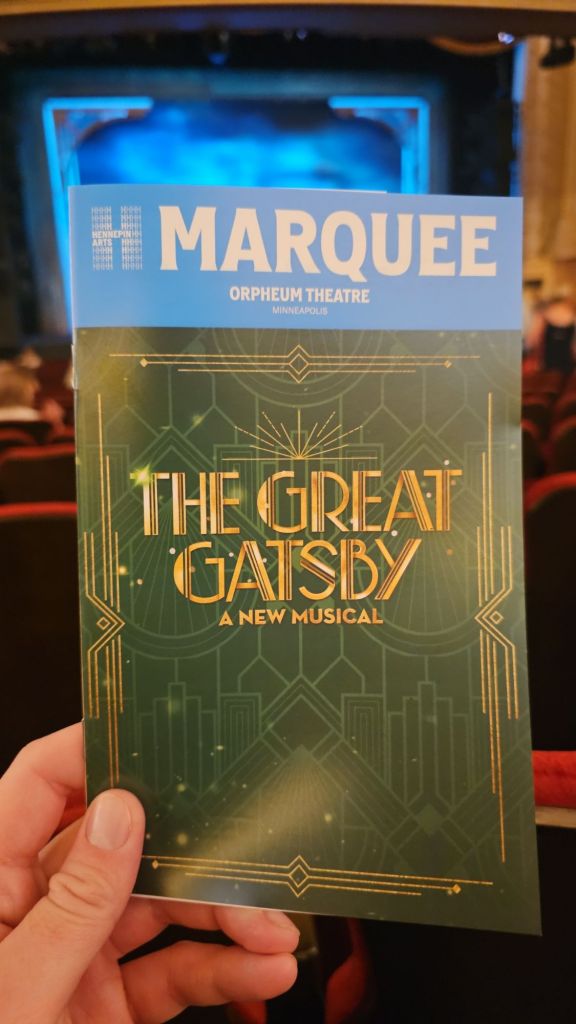
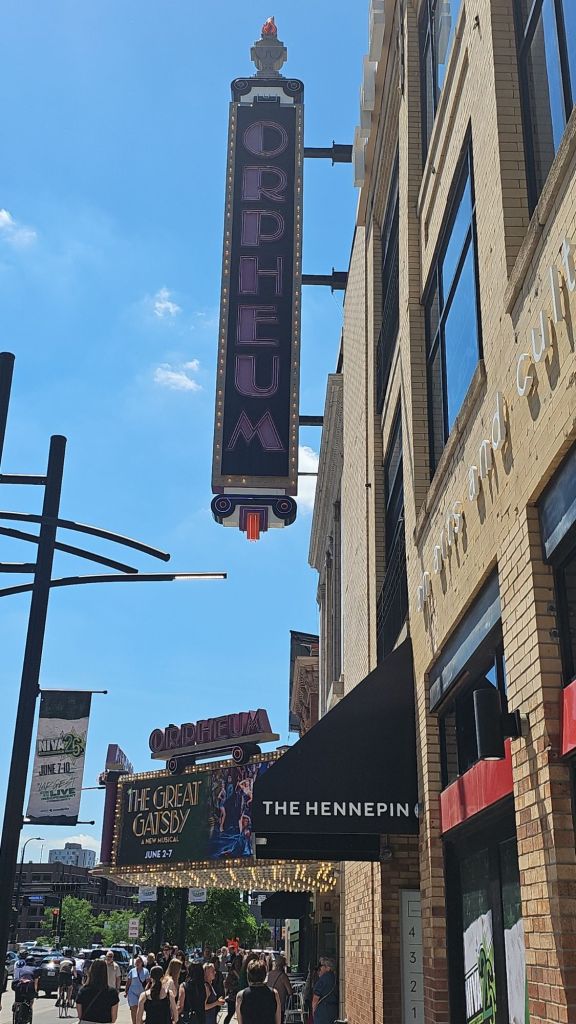
  • The Great Gatsby is one of the great paradoxes of adaptation. On the one hand, it feels natural – the story has vivid characters, iconic imagery, buried secrets, and stark commentary on the American dream. On the other, much of the drama is internalized within the characters’ emotional states, and F. Scott Fitzgerald’s poetic language carries so much power that a literal representation of it rarely carries the same amount of impact. Neither the Jack Clayton-directed film adaptation from 1974 nor Baz Luhrmann’s adaptation from 2013 approached the classic status of the novel, but maybe a musical approach would work better. After all, songs can express emotions in ways traditional dialogue cannot, and a stage presentation can be stylized in a way that can make the imagery as impactful as the descriptions from the novel.

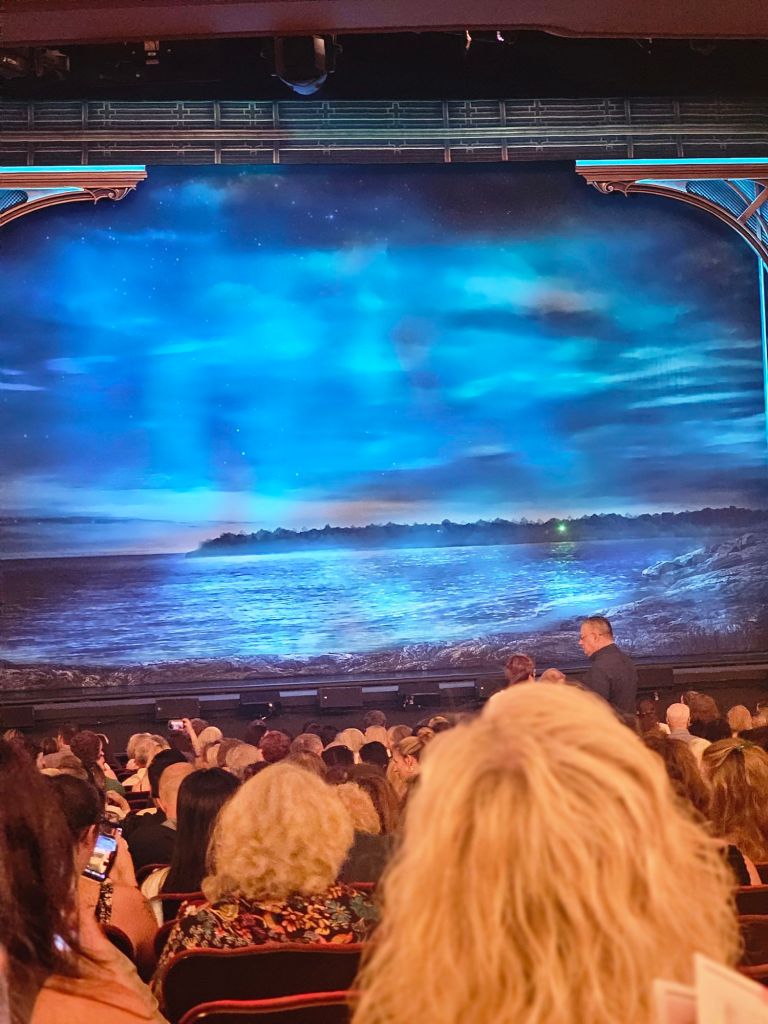
    The new Broadway tour of The Great Gatsby with music and lyrics by Jason Howland and Nathan Tysen (Paradise Square) and a book by Kait Kerrigan (The Mad Ones) is probably best described as “respectable”. It hits all of the expected plot beats and gives us able representations of the characters. The sets (supplemented with projections) and costumes are lavish and actors, for the most part are charming and have lovely singing voices. So why for most of this show’s first act did I find myself so profoundly unmoved?

    Maybe it’s the structure – for whatever reasons Kait Kerrigan chose to use the first act entirely for setup. Nick Carroway, famously a passive protagonist, is pinged around New York from mansion to mansion and party to party, hardly even a factor in his own story. On the page Fitzgerald makes it work through his vivid descriptions of what Nick sees. On stage, though, it feels a bit like you’re in attendance at a party you that you never intended to go to. Maybe the show is just too good at portraying the empty gaudinessnof the Gilded Age, because for all of the flashy spectacle and choreography of the dance numbers during the party sequences, I was close to bored.

    This isn’t necessarily the fault of the cast – Joshua Grosso, who plays Nick, is actually quite good. On the occasions where he’s actually given something to do he brings a genuine moral center to the character that the others lack. His Nick might not be a strong character, but at least he has a conscience. Senseless Ahmady as Nick’s cousin Daisy Buchanan is also very good, embodying the superficial cheerfulness that hides a shattered interior very well. As Tom Buchanan Will Branner lays it on a little thick – his Tom is definitely a brute and a bully, and it’s hard to believe anyone would want to spend any time around him. Leanne Robinson is appealingly witty as Jordan Baker, while Tally Sessions and Lila Coogan make the most of their small, but key roles as George and Myrtle Wilson. Coogan in particular brings a real sensitivity to a woman who seeks out an affair more out of boredom than malice, but still has genuine feelings for her husband.

    That leaves us with Gatsby himself. Jay Gatsby is played by Jake David Smith. He has a great stage presence, a wonderful voice, and he’s barely in the show at all for most of the first act. This comes with the story, of course, but as written and directed here it makes the character feel less mysterious and more superficial. He and Nick bond over their experiences fighting in World War I (I did appreciate the show’s emphasis on their being military veterans dealing with trauma) and then Gatbsy immediately asks Nick to try and reconnect him with Daisy in “For Her”, one of the many songs in the show’s score with pleasant music but thuddingly on-the-nose lyrics. F. Scott Fitzgerald’s novel isn’t exactly known for its subtlety (there’s a reason it is often used to teach symbolism in junior high English) but the songs here, well-performed as they are, feel like they’re taking the already clear symbolism and then repeating the same points over and over again. Maybe that’s why some of my favorite songs from the show either illustrate new moments or serve to underline what’s already there, like “Shady”, the second act opener where Meyer Wolfsheim (Edward Staudenmeyer, so slimy he makes Tom Buchanan seem less awful by comparison) describes the crime web that’s been funding Gatsby’s wealth and could easily take everyone down should it crumble, “Made to Last”, where the whole main cast has a heated argument in a hotel room that lays all of their secrets and emotions bare, or “One Way Road”, where an emotionally devastated Myrtle sings about feeling trapped between Tom and George, eventually finding her way to an understanding that it then cut short by her tragic fate.

    You might note that all of these songs take place in the show’s second act – that’s no accident. As I alluded to before, there’s no real plot, complicated character dynamics, or ironic subtext until after intermission – it’s all about setting the world and characters, and everything is exactly what and who they appear to be. Even the big Act One closing number “My Green Light” has Gatsby and Daisy singing about how being reunited in romance will finally save both of them from the lives they’re stuck in, with no hint whatsoever that it’s actually about to lead to their downfall. All of that is saved until Act Two, which as a result is so overstuffed with melodrama that while it’s certainly more entertaining it also feels like a completely different show. Maybe the show would have been more effective if it spent more time alluding to the darkess in Gatsby’s background; then it would have made his inevitable downfall feel less abrupt. And more so than that, the impending sense of doom makes the glitzy party sequences feel all the more superficial. I know that’s the point, but when we get an extended party number that features the cast dancing with choreography very much not of the 1920s while dressed up as doughboys, I couldn’t help but wonder what was even going on.

    The Great Gatsby: a New Musical seems conflicted between whether it wants to be a sweeping romance or a personal tragedy. The actors perform their parts skillfully and the production has all of the spectacle you’d ask for, but it can’t help but feel as empty at its core as Gatsby’s mansion.

    There’s a proverb about a young piano prodigy who shows a career musician that he can recreate a song perfectly, but plays without any feeling. The musician tells the child that he’s playing the notes but has not year learned to play the music. A show like The Great Gatsby,  which presents all of the necessary elements for a great adaptation but lacks the ideas or inspiration to bring them all together, feels a lot like that.

    THE GREAT GATSBY plays at the Orpheum Theatre through June 7

  • Everybody on stage has a story.

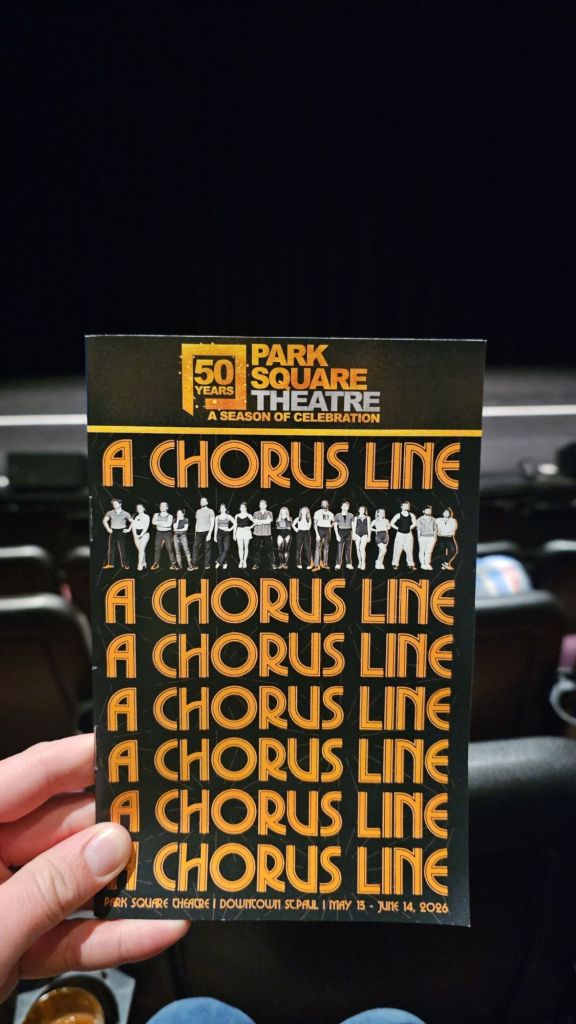
    Everyone who serves as part of a show got there in their own way, has their own inspiration, brings their own baggage. At best those qualities illuminate the final product, but sometimes the things that make the performers special are flattened in service of the director’s vision. And yet, the actors, dancers, and other artists who make the shows happen keep going out to make them, whether it’s for the love of the art or just to secure another job, and so the world keeps going round. A Chorus Line is an electrifying, bittersweet ode about the people who make art, the sacrifices necessary to do so, and whether or not it is all worth it in the end.

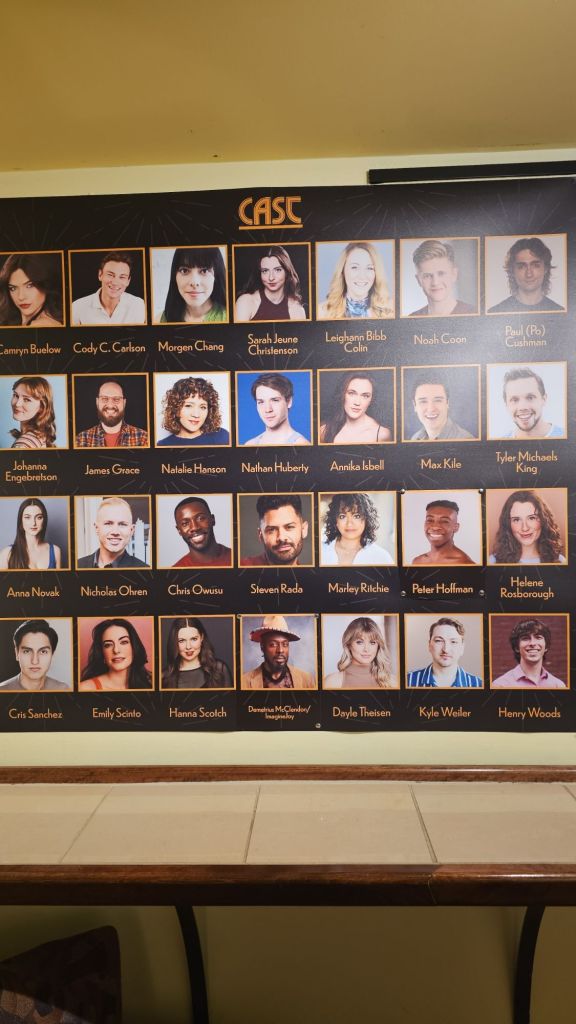
    Park Square Theatre’s new production of the Pulitzer Prize-winning musical (timed for the show’s 50th anniversary) is an embarrassment of talent. The cast of more than two dozen actors take to the material like ducks to water, perfectly embodying the neuroses and dreams that come when you’re auditioning for a show. The show follows a group of actors as they audition for parts as dancers in a Broadway show, with the director Zach (Tyler Michaels King) encouraging them to share their backstories and what led them to dancing as part of their audition. What results is a melange of different stories about the cast members, from the flamboyant Greg (James Grace) to the confident Sheila (Camryn Buelow) to the neurotic Kristine (Sarah Jeune Christenson) and the vain Val (Dayle Theisen), among many others. All of these characters are based on real people known to original directions Michael Bennett and bookwriters James Kirkwood & Nicholas Dante, which makes their personalities ring true, even when they are expressing them through song and dance.

    Director Stephen DiMenna (working with Michael Bennett’s original choreography) gives the show a fast-moving energy, shifting from one story to another with little pause. Whether it’s one of the large-scale numbers like “Hello Twelve, Hello Thirteen, Hello Love”, the gorgeous solo “Nothing” delivered by Diana (Marley Ritchie) or a heartbreaking monologue by Paul (Steven Rada), it’s always executed beautifully. Just as impressive as the control of energy is the control of tone. This is a show that loves theatre without over romanticizing it. A subplot involves Cassie (Emily Scinto) who is the ex-girlfriend of Zach. Zach doesn’t want to cast her, not because she’s no good, but because he thinks she’s too good. He always thought Cassie was destined to be a star and considers dancing in the chorus beneath her. Cassie, for her part, has given up on pursuing stardom and just wants to find work. Zach at times seems to be trying to sabotage Cassie’s audition, singling her out during group numbers with tips that only serve to throw her off (the deliberate insertion of mistakes by auditioners, both obvious and subtle, is a highlight of the choreography) Contrast that with the sequence where Cassie dances on her own, where she is as graceful as can be. There’s another moment where, as Cassie and Zach argue, the ensemble continues to dance behind them, and while the choreography remains the same, the tone shifts and the movements start to feel colder, almost ominous. Is that really what Cassie wants to reduce herself to?

    These and other ideas in A Chorus Line apply far beyond musical theatre. How many times have you felt like you’ve had to subjugate yourself for the sake of a job, or had a boss whose micromanagement has gotten in the way of your work? For the characters of A Chorus Line, dancing is as much of a lifeline as any other job, and like anyone else who loves what they do, the frustration is worth it. This is embodied fully in the late number “What I Did for Love”, as Diana leads the cast in a beautiful song about how they’ll never forget the love they had for dance, even when they can’t dance anymore.

    A Chorus Line is an exciting, funny, and challenging production that anyone who is into theatre can love. But even people without a background in theatre can relate to the ambition, passion, and heartbreak on display in the show.

    A CHORUS LINE plays at Park Square Theatre through June 14th

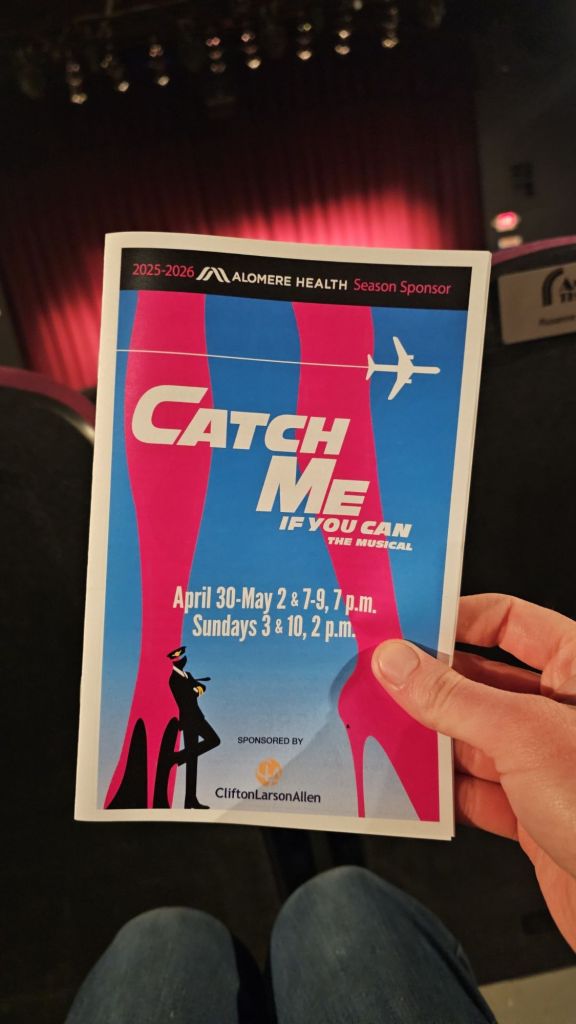
  • There’s something about con artist stories that is inherently entertaining. The constant balancing act that comes with having to keep lies straight – or reform them on the fly – is irresistible to watch, and the charisma needed to pull off such deceptions almost always makes the central characters in these stories fun to follow. You find yourself rooting for them to succeed, even when their victims are being fleeced or defrauded to the tune of millions.

    Catch Me If You Can tells the story of Frank Abignail, a con man so larger-than-life that even his autobiography that served as the source material for this musical (by way of the 2002 Steven Spielberg film) turned out to be significantly made up. Throughout the musical, Frank (Ty Butler) tells his own story of being a teen from a troubled family who learned the tricks of con artistry early on from a father (Jeff Kirchoff) who is constantly trying to outrun his own responsibilities. When his parents get divorced, Frank decides to run away and make it on his own, supporting himself through check fraud before moving on to bigger things, namely posing as a Pan Am pilot and eventually also a doctor, choosing careers seemingly only because he likes being surrounded by girls.

    Enormous credit must be given to Ty Butler for his wonderful performance here – he must be on stage for nearly 80% of the runtime, and he doesn’t slip for a second. He captures Frank Abignail’s intelligence, wit, and most significantly, his youth. Never once in this show do you forget that Frank is just a kid, and he’s doing what he’s doing in a naive attempt to get his parents back together. As Frank Sr Jeff Kirchoff also gives a very strong performance as a man whose entire life is seemingly a performance. He always seems to be working on one hustle or another, even if it’s one he’s playing on himself. The scenes where Frank and his father periodically meet up over the course of the show are heartbreaking as you see Frank Sr beam with pride at his son’s fraud when we know he could at any moment tell his son to stop and get himself out of peril.

    That peril comes largely in the form of Carl Hanratty, an FBI agent who catches Frank’s case and is tasked with tracking him down. Patrick Sieve’s performance as a professional stick-in-the-mud is so effective I initially thought his acting was stiff, but soon realized it was all part of his character, and by the time Sieve gets his own musical number with “Breakin’ the Rules” he’s become as vivacious and entertaining a presence in the show as Frank himself.

    Hanratty isn’t merely a Javert figure here – as the show progresses and he and Frank meet through a series of near misses, he starts to become a secondary father figure to Frank. This gets underlined in a second act musical number between him and Frank Sr where they both sing about their difficult relationships with their own parents and how it brought them to their current path. This is one of several second act numbers that feels like it’s slowing down the show. In general, Donna Magnusson’s direction in the second act feel less exciting than the high-energy of the first. In a way, this makes sense, as Frank is no longer constantly moving as he works a new con. He’s actually trying to get out of the life and settle down with a nurse (Sophie Hwang) he met while posing as a doctor. Their love story is sweet, and Hwang’s performance is lovely, but the whole subplot is dramatically undercut as you realize it won’t go anywhere because Frank simply can’t stop lying.

    Technically, this may be the most accomplished show I’ve seen at the Andria thus far. Some occasional mic issues aside, the presentation was excellent. The set by Greg Bohl is simple – one large piece representing an airport terminal is on center stage as other props and pieces get moved on and off as needed. The rest of the various settings are provided by Holly Wallerich’s projections, which are very effectively handled – underlying the mood without calling attention to themselves. The choreography sometimes feels like it could be tighter or more energetic, but I can understand why that might be an issue when working with such a large ensemble.

    Overall, Catch Me If You Can is a wonderfully entertaining musical with strong performances throughout, a perfect capstone to the Andrea’s 25-26 season.

    CATCH ME IF YOU CAN runs at the Andria Theatre through May 10th

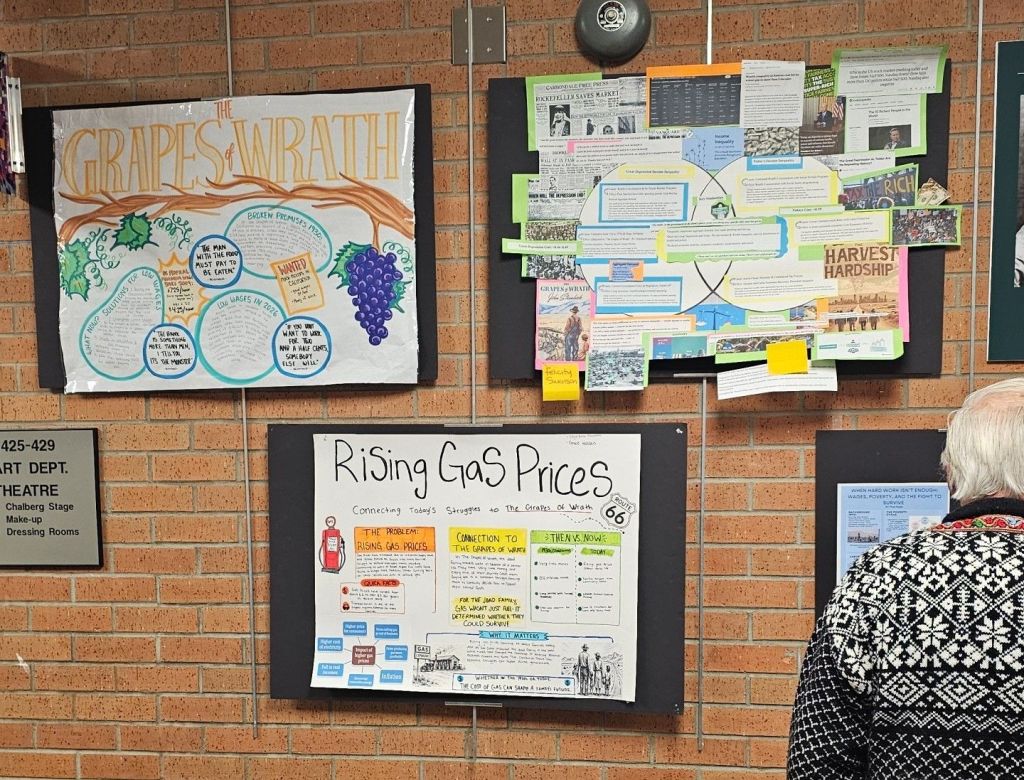
  • John Steinbeck’s The Grapes of Wrath is one of the seminal pieces of American literature, butbstrangely enough it’s one I’m mostly unfamiliar with except by reputation and premise. It wasn’t one of the novels I read in school, and despite my being a major fan of both John Ford and Henry Fonda, I still haven’t seen the 1940 film adaptation. So I went in to see the Brainerd Community Theatre’s production of The Grapes of Wrath (from an adaptation by Frank Galati than ran on Broadway in 1990, winning the Tony for Best Play) I was more or less experiencing the story for the first time. Director Joseph Yow brings technical excellence and a deep sense of empathy to the material, creating a show that offers no easy answers, and for better or for worse, can sometimes feel as punishing for the audience as it is for the characters on stage.

    The story, set in the Dust Bowl, follows the Joads, a family of displaced farmers as they travel to California to try and seek out work. It’s not an easy trip, however, and even after facing the trials and tribulations of the journey they find that conditions there for workers are hardly better than what they had back home. The central family members are Ma Joad (Jenny Kiffmeyer), the matriarch who serves as the moral center of the story, Pa (Mark Oehrlein) devoted to supporting and protecting his family at any cost, and their son Tom Joad (Arsen Engles), recently paroled after serving time in prison for homicide. Also in the mix are Tom’s brothers Al (Henry Hultberg) and Noah (Brad Kohl), his pregnant sister Rose of Sharon (Emma Hilgart), and other various family members as well as the significantly-initialed Jim Casey (Phyl Bell), a former preacher who became disillusioned and joins the family on their journey as part of his desperate search for a purpose in life.

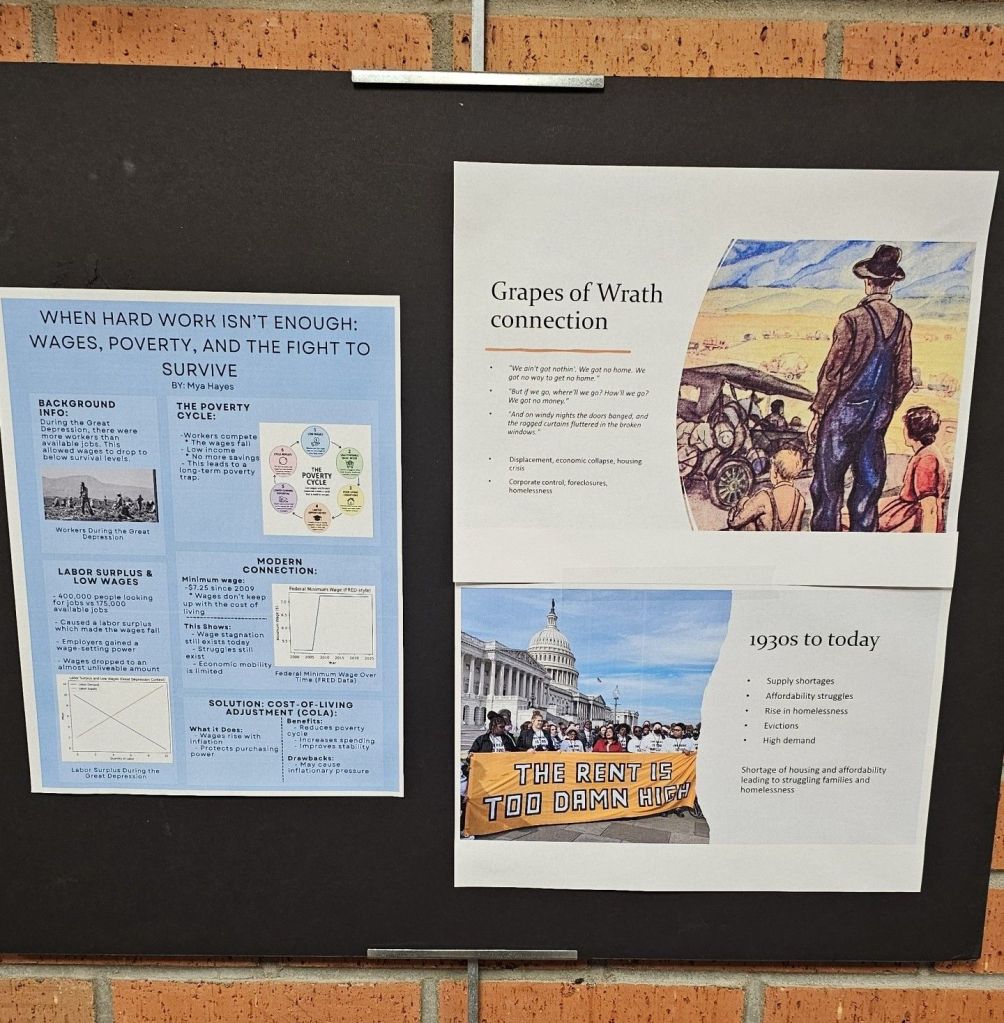
    The production also features works of art and other projects inspired by The Grapes of Wrath made by CLC students

    The first act of the play sets up this ensemble of characters and follows them as they begin their trip West (there’s an ingenious bit of stagecraft from director Yow and set designer Tim Leagjeld where the set pieces of the family’s home become the truck that carries them to California) where along the way several family members are lost to death or despair while others are pushed to the emotional breaking point. They also encounter other travelers who aren’t doing much better – a highlight of the act is an absolutely devastating monologue by Lorri Jager (as a traveler who is coming back from California) as she describes the predatory and exploitative environments faced by workers. Other characters also warn the Joads that California is far from the halcyon place for workers they have been promised, but the family still pushes on, seemingly because they have nowhere else to go. This creates a feeling in the first act of the characters being less like active participants in their own story and more like people weathering the obstacles put in their way by fate.

    The second act I found much more engaging, as the characters try to establish themselves and do something to create a life despite the seemingly unbreakable corruption of the farmers who exploit the migrant farm workers like them and the local police who are more than happy to serve as their axe men. We get actual debates and conversations about ideas here, with real stakes as Tom and the others have to weigh the options of dealing with the horrible work environments for the sake of survival or join those who are fighting back, and risk life and limb in pursuit of justice. It’s during these scenes that the character of Tom Joad really comes to life. I get the sense that he’s meant to feel like a character whose capacity for violence is constantly looming over him, but during the first act Arsen Engles’ performance feels more passive and muted… I didn’t get a sense that he was potentially dangerous. It’s not until the second act, when Tom sees what he’s up against, that his rage begins to crack through with a sense of righteous fury that gives the whole show a jolt of energy. But even righteous fury can be dangerous, and when Joad’s temper gets the better of him he can’t imagine how the consequences might resonate.

    In other takes on Steinbeck’s novel Tom Joad would have been the central figure. But in this production he’s just one part of a well-balanced ensemble. If there’s any performance here that could be singled out as a central protagonist, it might be Jenny Kiffmeyer as Ma Joad, giving a powerful performance as the sort of woman whose natural warmth obfuscates her natural toughness. She’s always looking out for the others, sometimes in ways they might not even realize. Phyl Bell as Jim Casey is also very effective, both funny and moving as a man who lost one kind of faith only to find it invigorated once he found something else worth fighting for. Watson is always a welcome stage presence as he plays multiple roles, namely offering very needed comic relief as the Joad grandfather as well as sympathetic figures at the various camps where the Joads settle while travelling through California in a search for work. And no discussion about the show’s performances would be complete without mentioning the very talented Blake Lubinus, whose work with guitar, vocals, and harmonica create a musical backdrop for the show as well as help the transitions between scenes.

    I get the feeling that the story’s almost relentless parade of hardships might be too much for some audience members, especially those used to lighter fare from BCT. But the underlying humanity of the show will help carry the audience through, just like it does for the Joad family themselves. Their troubles might never truly end, not even when the play does. But they always find a reason to keep on pushing forward, because that’s what humanity does, no matter how dark and grim things become. It’s like Ma Joad says, “We’re the people – we go on!’.

    The Grapes of Wrath runs through May 3 at the Chalberg Theatre at Central Lakes College.