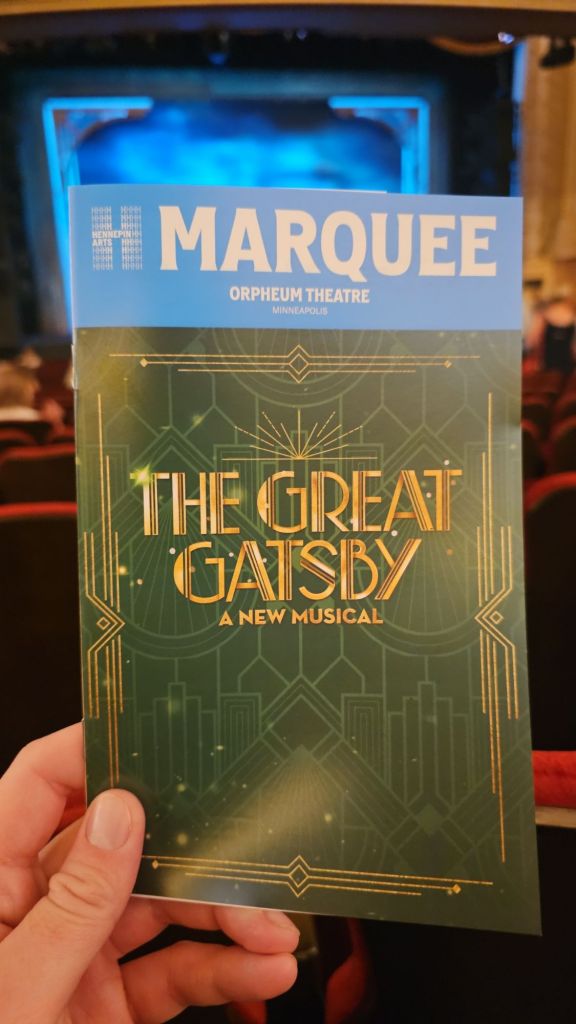
The Great Gatsby is one of the great paradoxes of adaptation. On the one hand, it feels natural – the story has vivid characters, iconic imagery, buried secrets, and stark commentary on the American dream. On the other, much of the drama is internalized within the characters’ emotional states, and F. Scott Fitzgerald’s poetic language carries so much power that a literal representation of it rarely carries the same amount of impact. Neither the Jack Clayton-directed film adaptation from 1974 nor Baz Luhrmann’s adaptation from 2013 approached the classic status of the novel, but maybe a musical approach would work better. After all, songs can express emotions in ways traditional dialogue cannot, and a stage presentation can be stylized in a way that can make the imagery as impactful as the descriptions from the novel.
The new Broadway tour of The Great Gatsby with music and lyrics by Jason Howland and Nathan Tysen (Paradise Square) and a book by Kait Kerrigan (The Mad Ones) is probably best described as “respectable”. It hits all of the expected plot beats and gives us able representations of the characters. The sets (supplemented with projections) and costumes are lavish and actors, for the most part are charming and have lovely singing voices. So why for most of this show’s first act did I find myself so profoundly unmoved?
Maybe it’s the structure – for whatever reasons Kait Kerrigan chose to use the first act entirely for setup. Nick Carroway, famously a passive protagonist, is pinged around New York from mansion to mansion and party to party, hardly even a factor in his own story. On the page Fitzgerald makes it work through his vivid descriptions of what Nick sees. On stage, though, it feels a bit like you’re in attendance at a party you that you never intended to go to. Maybe the show is just too good at portraying the empty gaudinessnof the Gilded Age, because for all of the flashy spectacle and choreography of the dance numbers during the party sequences, I was close to bored.
This isn’t necessarily the fault of the cast – Joshua Grosso, who plays Nick, is actually quite good. On the occasions where he’s actually given something to do he brings a genuine moral center to the character that the others lack. His Nick might not be a strong character, but at least he has a conscience. Senseless Ahmady as Nick’s cousin Daisy Buchanan is also very good, embodying the superficial cheerfulness that hides a shattered interior very well. As Tom Buchanan Will Branner lays it on a little thick – his Tom is definitely a brute and a bully, and it’s hard to believe anyone would want to spend any time around him. Leanne Robinson is appealingly witty as Jordan Baker, while Tally Sessions and Lila Coogan make the most of their small, but key roles as George and Myrtle Wilson. Coogan in particular brings a real sensitivity to a woman who seeks out an affair more out of boredom than malice, but still has genuine feelings for her husband.
That leaves us with Gatsby himself. Jay Gatsby is played by Jake David Smith. He has a great stage presence, a wonderful voice, and he’s barely in the show at all for most of the first act. This comes with the story, of course, but as written and directed here it makes the character feel less mysterious and more superficial. He and Nick bond over their experiences fighting in World War I (I did appreciate the show’s emphasis on their being military veterans dealing with trauma) and then Gatbsy immediately asks Nick to try and reconnect him with Daisy in “For Her”, one of the many songs in the show’s score with pleasant music but thuddingly on-the-nose lyrics. F. Scott Fitzgerald’s novel isn’t exactly known for its subtlety (there’s a reason it is often used to teach symbolism in junior high English) but the songs here, well-performed as they are, feel like they’re taking the already clear symbolism and then repeating the same points over and over again. Maybe that’s why some of my favorite songs from the show either illustrate new moments or serve to underline what’s already there, like “Shady”, the second act opener where Meyer Wolfsheim (Edward Staudenmeyer, so slimy he makes Tom Buchanan seem less awful by comparison) describes the crime web that’s been funding Gatsby’s wealth and could easily take everyone down should it crumble, “Made to Last”, where the whole main cast has a heated argument in a hotel room that lays all of their secrets and emotions bare, or “One Way Road”, where an emotionally devastated Myrtle sings about feeling trapped between Tom and George, eventually finding her way to an understanding that it then cut short by her tragic fate.
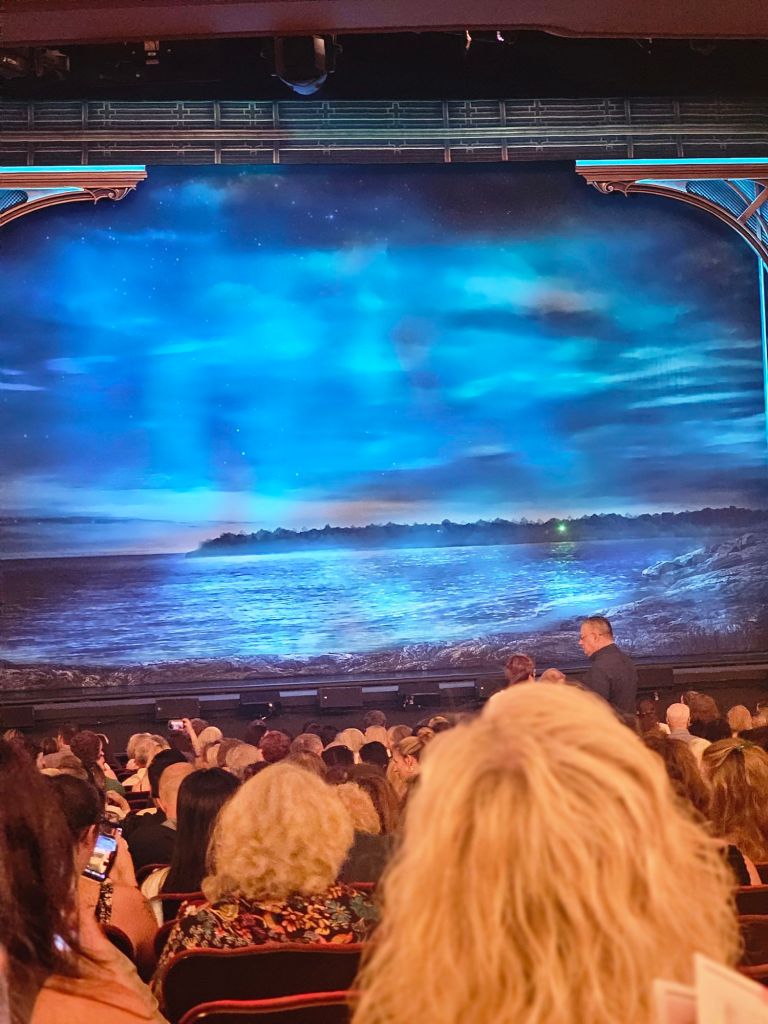
You might note that all of these songs take place in the show’s second act – that’s no accident. As I alluded to before, there’s no real plot, complicated character dynamics, or ironic subtext until after intermission – it’s all about setting the world and characters, and everything is exactly what and who they appear to be. Even the big Act One closing number “My Green Light” has Gatsby and Daisy singing about how being reunited in romance will finally save both of them from the lives they’re stuck in, with no hint whatsoever that it’s actually about to lead to their downfall. All of that is saved until Act Two, which as a result is so overstuffed with melodrama that while it’s certainly more entertaining it also feels like a completely different show. Maybe the show would have been more effective if it spent more time alluding to the darkess in Gatsby’s background; then it would have made his inevitable downfall feel less abrupt. And more so than that, the impending sense of doom makes the glitzy party sequences feel all the more superficial. I know that’s the point, but when we get an extended party number that features the cast dancing with choreography very much not of the 1920s while dressed up as doughboys, I couldn’t help but wonder what was even going on.
The Great Gatsby: a New Musical seems conflicted between whether it wants to be a sweeping romance or a personal tragedy. The actors perform their parts skillfully and the production has all of the spectacle you’d ask for, but it can’t help but feel as empty at its core as Gatsby’s mansion.
There’s a proverb about a young piano prodigy who shows a career musician that he can recreate a song perfectly, but plays without any feeling. The musician tells the child that he’s playing the notes but has not year learned to play the music. A show like The Great Gatsby, which presents all of the necessary elements for a great adaptation but lacks the ideas or inspiration to bring them all together, feels a lot like that.
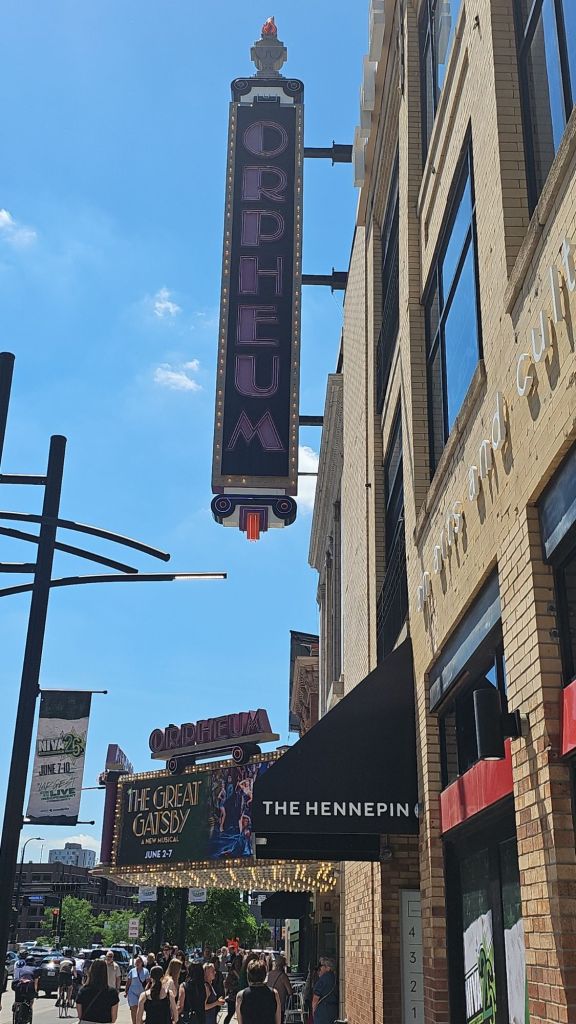
THE GREAT GATSBY plays at the Orpheum Theatre through June 7


Leave a Reply