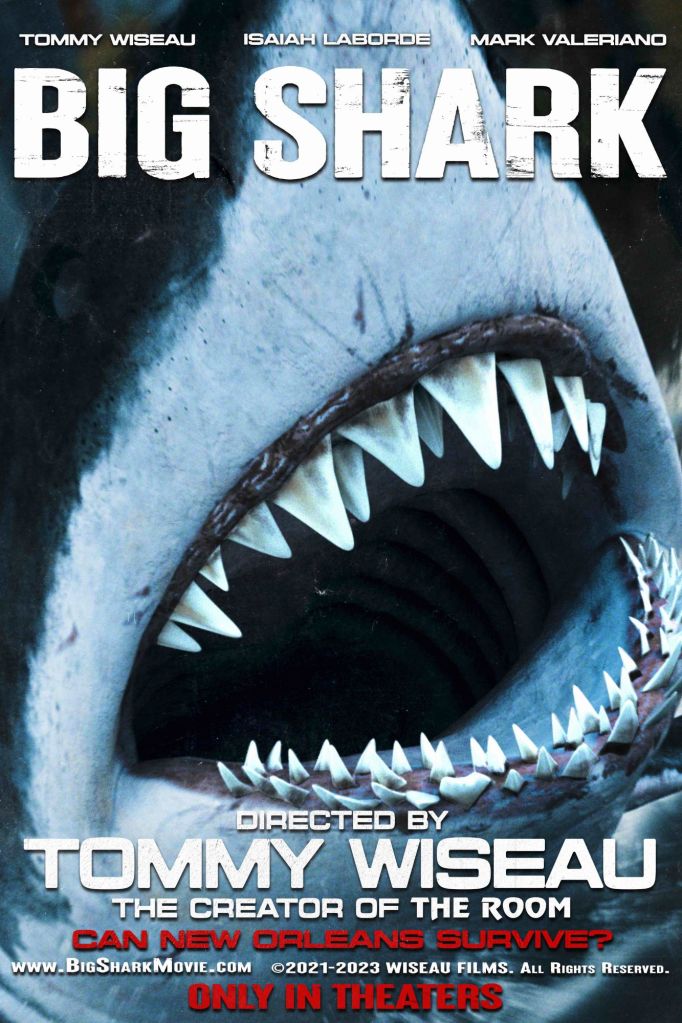
Big Shark is Tommy Wiseau’s latest exploration of the joys of male friendship and how women are the biggest threat to it. Also there’s a big shark terrorizing New Orleans.
One of the biggest concerns that comes with a filmmaker like Wiseau following up a movie as notorious as The Room is that he would start acting like he was in on the joke. Trying to wink at the camera and play into the reputation he’s cultivated in the years since The Room became a phenomenon in bad movie circles would likely be insufferable. The best thing that can be said about Big Shark is that Tommy Wiseau’s earnestness is still wholly present. Much like The Room was his attempt to create a Tennessee Williams-esque melodrama, Big Shark is an earnest effort at making a disaster-horror movie, although Wiseau still can’t help but soak the proceedings in melodrama along the way.
Big Shark follows three New Orleans firefighters (Isaiah LaBorde, Mark Valeriano, and Wiseau himself) who have to save the city from a series of deadly shark attacks. In between – and sometimes during the shark attacks – they still have time for dance parties, basketball, day drinking with friends, and arguments with their girlfriends (who in the grand tradition of Wiseau’s films, are all obnoxious harpies). Casting himself as a firefighter allows Wiseau to indulge in another of his trademarks: endless self-aggrandizement. People are constantly telling our heroes how heroic they are, and hardly a scene goes by without someone reminding Wiseau that he’s a really great guy. The interplay between the firefighters (all of whom live in the same house, presumably to save on the movie’s budget) is very reminiscent of The Room in its idealized portrayal of male friendship alternated with harsh, angry arguments. What’s weird is how abruptly the tone shifts from friendly and angry and back again, often in the same scene or even the same conversation. One thing that can be said, in contrast to The Room, is that despite the inconsistent writing and acting I didn’t find myself asking why these guys were friends in the first place – if nothing else, the bond they have as firefighters comes through.

The same thing can’t be said about the relationships between the men and their girlfriends, though. The arguments between them, especially between Wiseau’s Patrick and his girlfriend Sophia (Ashton Leigh, an old pro at this genre, having appeared in such films as Mississippi River Sharks, Ozark Sharks, Swamp Shark, and Great White Waters) are among the most insufferable parts of the movie; much like in The Room these arguments and conversations constantly repeat very strangely worded turns of phrase (most notably “you have a delusional mind!”) like a Harold Pinter play translated by Martians. What makes these scenes so frustrating is that they contribute almost nothing to the plot outside of manufacturing conflict between the characters, something that shouldn’t be necessary considering there’s a big shark on the loose.
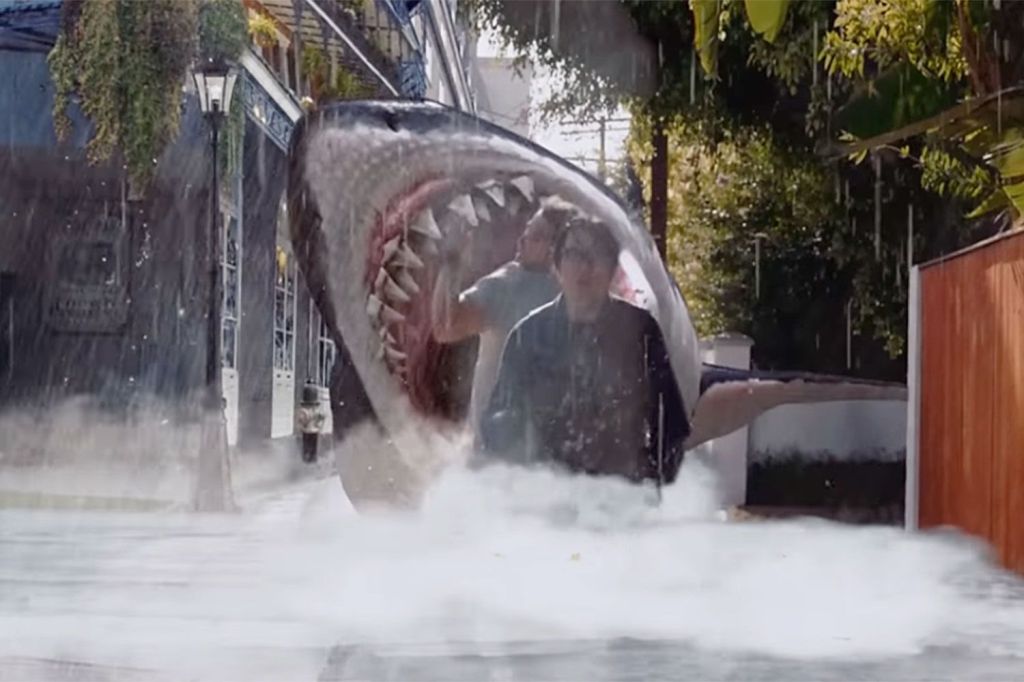
The shark scenes come fast and end just as abruptly, with the beast created through SyFy-grade CGI as it flies down flooded streets of New Orleans munching away at random civilians. The streets flooding with water is used as a way of foreshadowing the shark attacks and there’s an oblique reference to the city’s vulnerability to flooding in the wake of Hurricane Katrina, but there’s no real effort made at explaining where either the flooding or the shark came from. The only scenes that contain any suspense are when our heroes are trying to find the shark’s breeding ground so they can take it out with a pig stuffed with dynamite (the extended sequence where they procure the porker from a local barbecue place has to be seen to be believed – it plays like a Tim Robinson sketch). They’re also the only sequences where the shark doesn’t immediately devour whatever is in front of it (presumably the shark is a lot more effective at killing when flying through the air compared to when it is actually underwater). Like many a b-movie monster, the shark seems to vary in size from scene to scene. Wiseau describes the shark in dialogue as being thirty-five feet long, but it grows and shrinks depending on if it needs to navigate the streets, prowl the depths, or attack a yacht or suspension bridge (yes, that happens).
Despite all of this, Tommy Wiseau’s technical skills do seem to have improved since The Room, although this could be a result of having more accomplished technicians below-the-line (Christian Schulz, one of several credited cinematographers, is a director in his own right and editor/colorist Hunter Thomas has worked as a technician and camera operator on many movies, including the New Orleans-set Renfield.) We get some expected obvious use of green screens that seem like part of Wiseau’s visual style at this point, but the location shooting in New Orleans is actually not bad. Wiseau’s affection for the city and the people who live there definitely comes through.
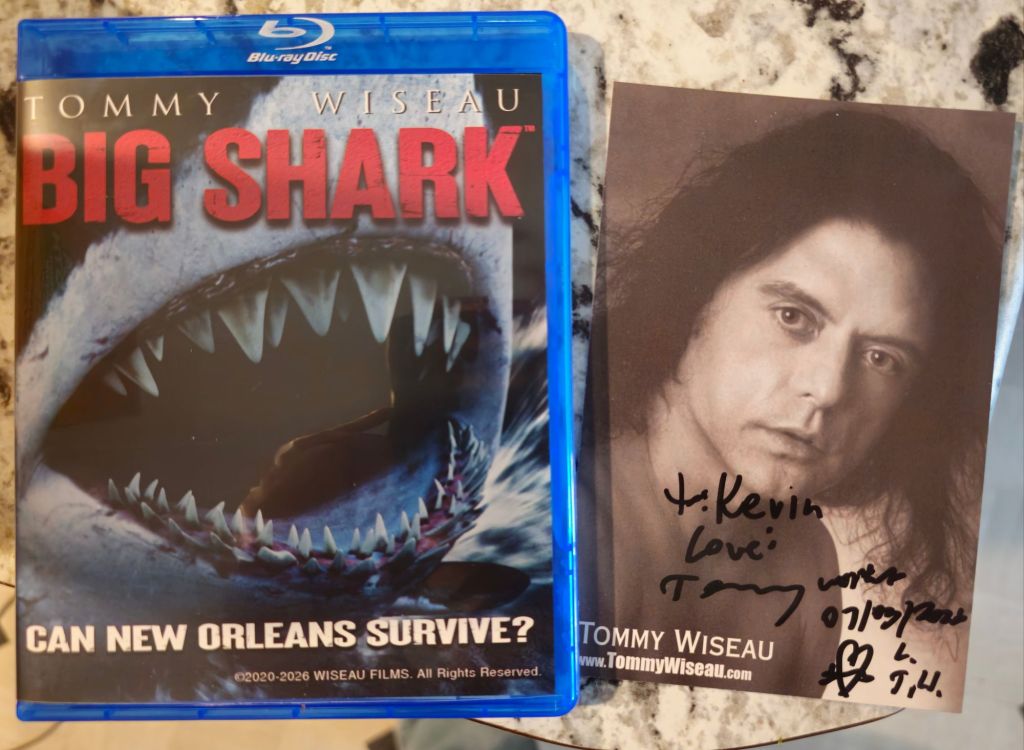
This is clearly a movie meant to be seen with a rowdy crowd – that’s how most people have seen it since 2023, in event screenings often hosted by Wiseau himself (say what you will about him, but the man clearly knows his audience). I watched it at home on its newly-released Blu-ray, which is admittedly probably the least ideal viewing situation. As a result while there were plenty of unintentional laughs, after nearly two hours of it I ended up feeling like I was banging my head against the wall. This is a fascinating movie – like The Room it seems to transcend normal classification of “good” or “bad” or evem “so bad it’s good”. If you’re a fan of The Room or are a mad movie aficionado this is definitely worth checking out, but make sure you’re in the right mood.


Leave a Reply