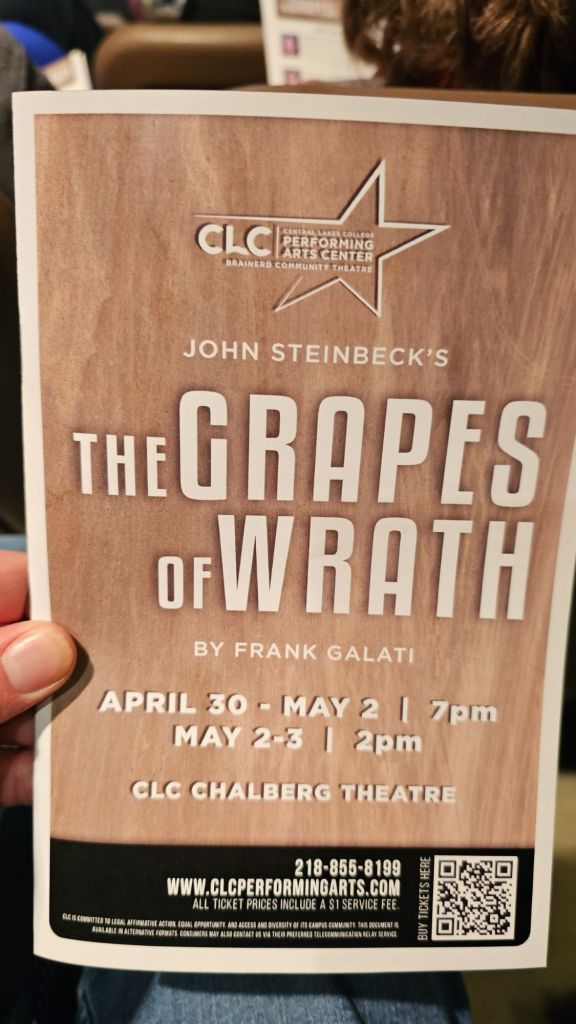
John Steinbeck’s The Grapes of Wrath is one of the seminal pieces of American literature, butbstrangely enough it’s one I’m mostly unfamiliar with except by reputation and premise. It wasn’t one of the novels I read in school, and despite my being a major fan of both John Ford and Henry Fonda, I still haven’t seen the 1940 film adaptation. So I went in to see the Brainerd Community Theatre’s production of The Grapes of Wrath (from an adaptation by Frank Galati than ran on Broadway in 1990, winning the Tony for Best Play) I was more or less experiencing the story for the first time. Director Joseph Yow brings technical excellence and a deep sense of empathy to the material, creating a show that offers no easy answers, and for better or for worse, can sometimes feel as punishing for the audience as it is for the characters on stage.
The story, set in the Dust Bowl, follows the Joads, a family of displaced farmers as they travel to California to try and seek out work. It’s not an easy trip, however, and even after facing the trials and tribulations of the journey they find that conditions there for workers are hardly better than what they had back home. The central family members are Ma Joad (Jenny Kiffmeyer), the matriarch who serves as the moral center of the story, Pa (Mark Oehrlein) devoted to supporting and protecting his family at any cost, and their son Tom Joad (Arsen Engles), recently paroled after serving time in prison for homicide. Also in the mix are Tom’s brothers Al (Henry Hultberg) and Noah (Brad Kohl), his pregnant sister Rose of Sharon (Emma Hilgart), and other various family members as well as the significantly-initialed Jim Casey (Phyl Bell), a former preacher who became disillusioned and joins the family on their journey as part of his desperate search for a purpose in life.
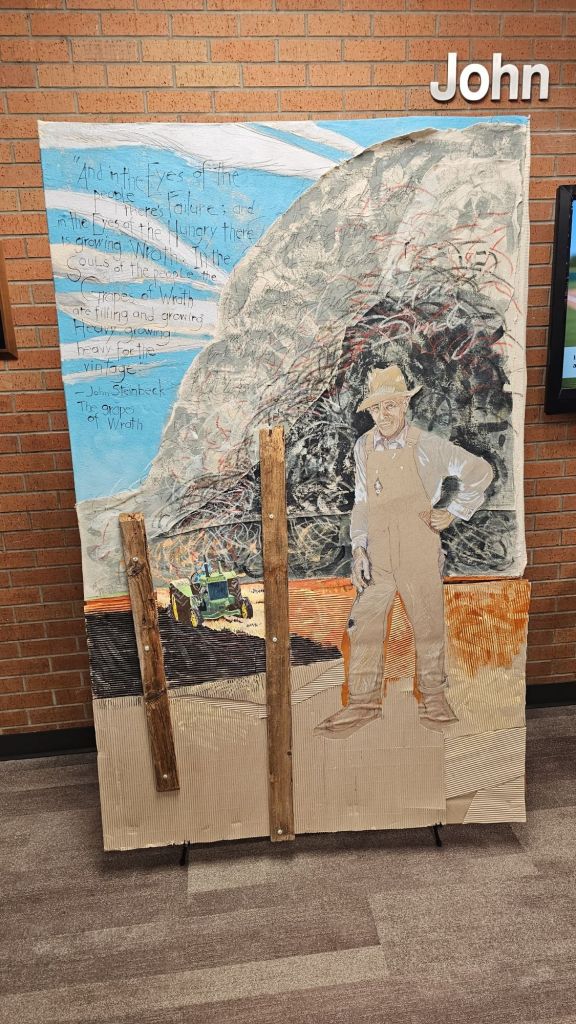
The first act of the play sets up this ensemble of characters and follows them as they begin their trip West (there’s an ingenious bit of stagecraft from director Yow and set designer Tim Leagjeld where the set pieces of the family’s home become the truck that carries them to California) where along the way several family members are lost to death or despair while others are pushed to the emotional breaking point. They also encounter other travelers who aren’t doing much better – a highlight of the act is an absolutely devastating monologue by Lorri Jager (as a traveler who is coming back from California) as she describes the predatory and exploitative environments faced by workers. Other characters also warn the Joads that California is far from the halcyon place for workers they have been promised, but the family still pushes on, seemingly because they have nowhere else to go. This creates a feeling in the first act of the characters being less like active participants in their own story and more like people weathering the obstacles put in their way by fate.
The second act I found much more engaging, as the characters try to establish themselves and do something to create a life despite the seemingly unbreakable corruption of the farmers who exploit the migrant farm workers like them and the local police who are more than happy to serve as their axe men. We get actual debates and conversations about ideas here, with real stakes as Tom and the others have to weigh the options of dealing with the horrible work environments for the sake of survival or join those who are fighting back, and risk life and limb in pursuit of justice. It’s during these scenes that the character of Tom Joad really comes to life. I get the sense that he’s meant to feel like a character whose capacity for violence is constantly looming over him, but during the first act Arsen Engles’ performance feels more passive and muted… I didn’t get a sense that he was potentially dangerous. It’s not until the second act, when Tom sees what he’s up against, that his rage begins to crack through with a sense of righteous fury that gives the whole show a jolt of energy. But even righteous fury can be dangerous, and when Joad’s temper gets the better of him he can’t imagine how the consequences might resonate.
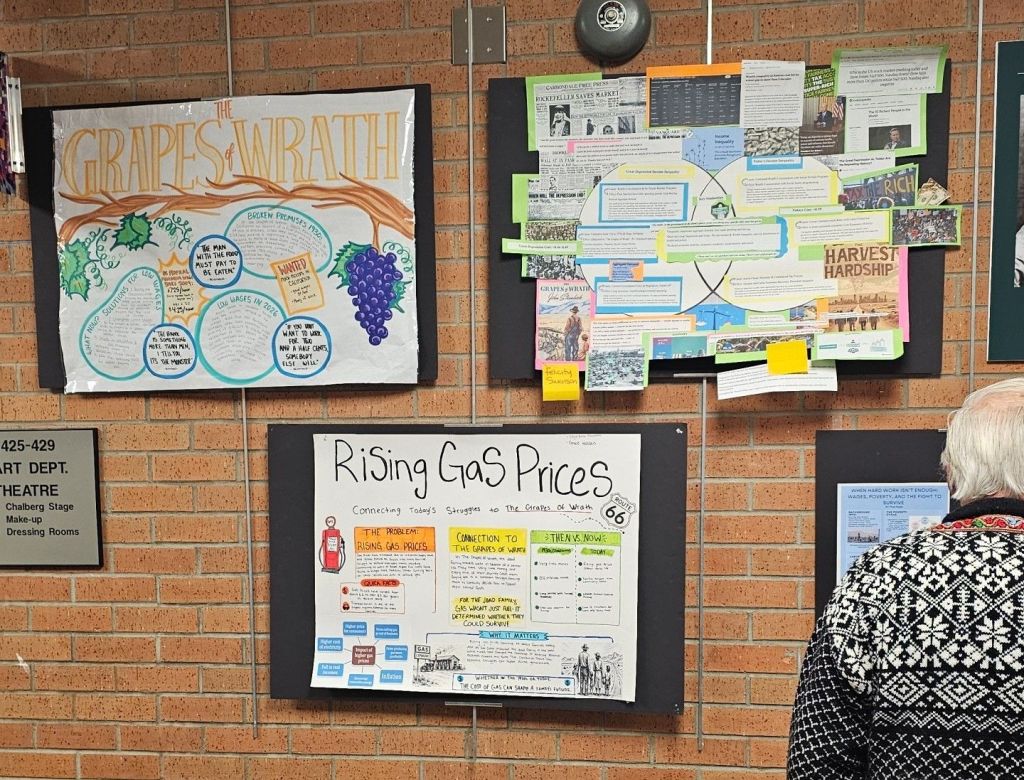
In other takes on Steinbeck’s novel Tom Joad would have been the central figure. But in this production he’s just one part of a well-balanced ensemble. If there’s any performance here that could be singled out as a central protagonist, it might be Jenny Kiffmeyer as Ma Joad, giving a powerful performance as the sort of woman whose natural warmth obfuscates her natural toughness. She’s always looking out for the others, sometimes in ways they might not even realize. Phyl Bell as Jim Casey is also very effective, both funny and moving as a man who lost one kind of faith only to find it invigorated once he found something else worth fighting for. Watson is always a welcome stage presence as he plays multiple roles, namely offering very needed comic relief as the Joad grandfather as well as sympathetic figures at the various camps where the Joads settle while travelling through California in a search for work. And no discussion about the show’s performances would be complete without mentioning the very talented Blake Lubinus, whose work with guitar, vocals, and harmonica create a musical backdrop for the show as well as help the transitions between scenes.
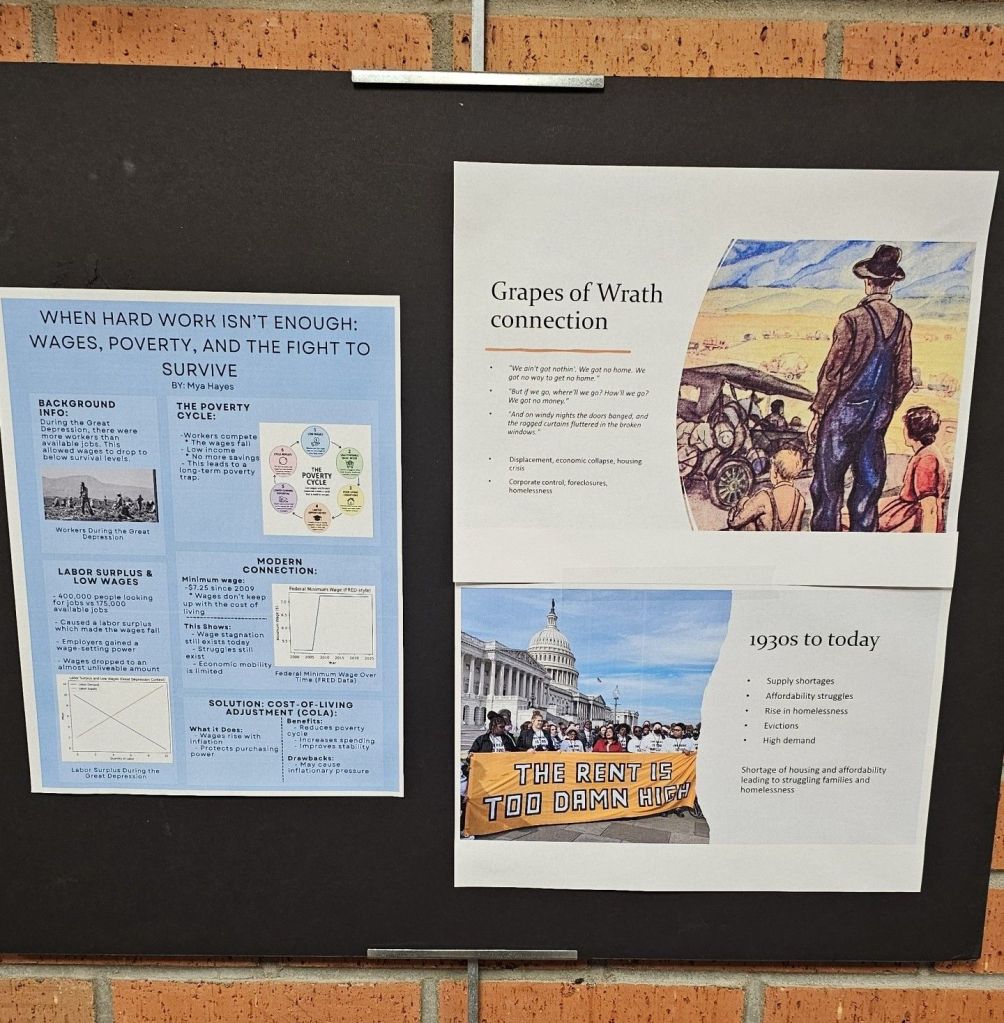
I get the feeling that the story’s almost relentless parade of hardships might be too much for some audience members, especially those used to lighter fare from BCT. But the underlying humanity of the show will help carry the audience through, just like it does for the Joad family themselves. Their troubles might never truly end, not even when the play does. But they always find a reason to keep on pushing forward, because that’s what humanity does, no matter how dark and grim things become. It’s like Ma Joad says, “We’re the people – we go on!’.
The Grapes of Wrath runs through May 3 at the Chalberg Theatre at Central Lakes College.
 Friends and Neighbors
Leave a comment