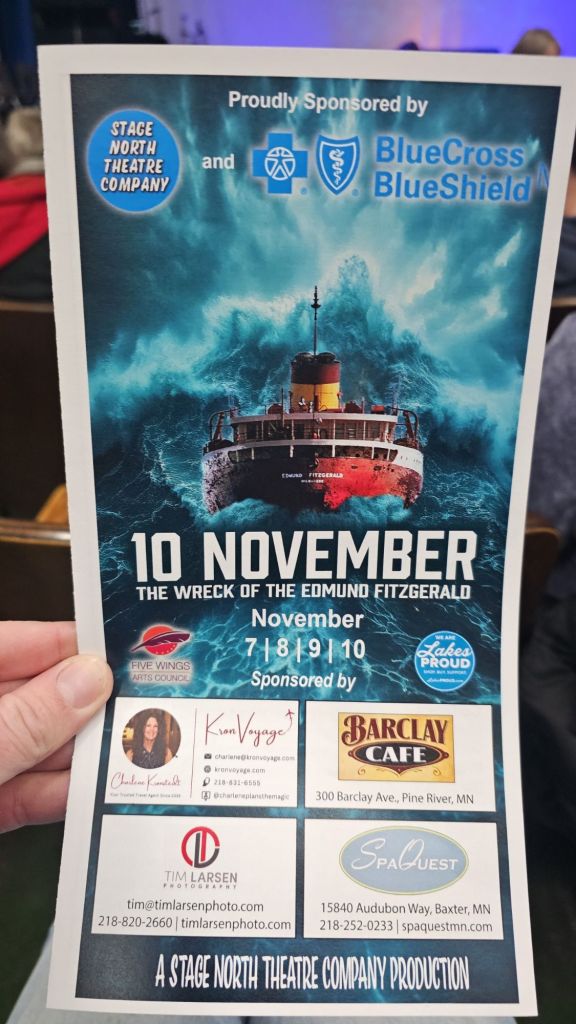
10 November is a difficult sort of stage production to review, because it doesn’t feel like a conventional play or musical. The show (written by Steven Dietz with music by Eric Peltoniemi) is loosely structured with a series of vignettes alternated with songs, having more of the feel of a memorial service. That is appropriate, as the show’s purpose is to commemorate the memories of the 29 men who lost their lives in the wreck of the SS Edmund Fitzgerald 50 years ago.
Stage North Theatre’s production, directed by Mark Oehrlein and Gary Hirsch, is a portrait of the disaster depicted as a collage of memories, reenactments, proverbs, and dreams. Some portions are taken from the historical record, others are dramatized, but they all serve to illustrate not just the lives lost, but the world they came from and the people who remember them. Although billed as a docudrama of sorts, 10 November isn’t an exposé or an investigative procedural. It wants answers, but knows that it probably can’t find them. In that way it is an effective portrayal of grief. In the wake of tragedy, you look wherever you can for an explanation. Even if you aren’t able to get the answer you want, the search can at least give you a greater understanding, and sometimes that’s the best you can ask for.
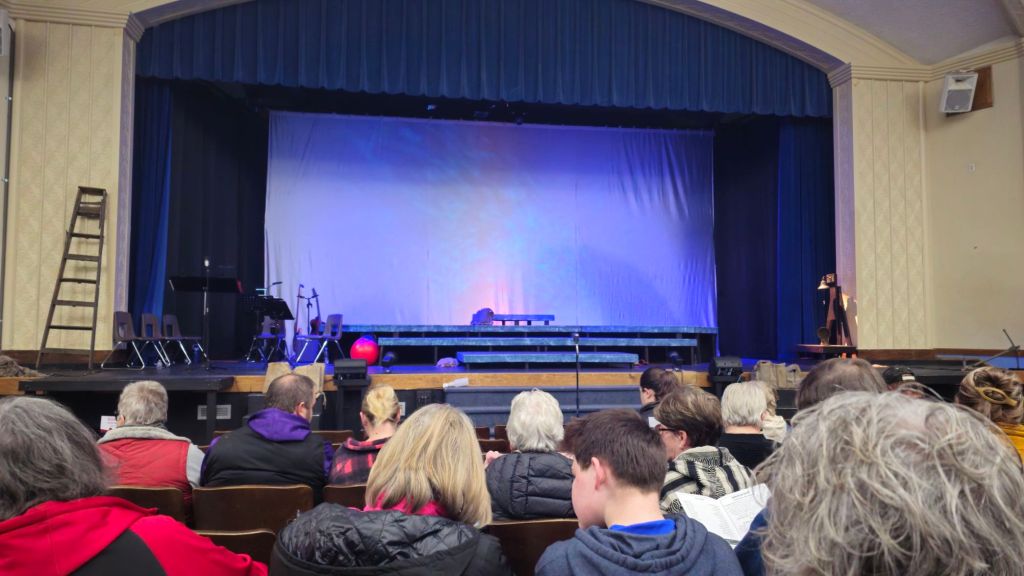
A show like this depends on a well-balanced ensemble of actors, and as is always the case Stage North delivers. The fourteen actors and three singers all work together to embody the wide-ranging cast of characters, with none overshadowing the others. Whether they’re testifying before an investigative body, musing about ship life, or just shooting the shit with each other, the sense is the same: these are ordinary people, doing their jobs. We get a great sense of the culture of maritime life on the Great Lakes, and how those cultural norms played a role in the leadup to the wreck. In many ways, the men on the ships are caught between two irresistible forces – the need to deliver for their bosses (who often could care less about the well-being of their men if profits are at stake) and the lake itself, which is seen in almost godlike terms, something to be viewed with respect and awe precisely because it could end your life at any moment. The waves and storms that come from Lake Superior are portrayed as so perilous that it’s a wonder there are people for whom going out there is their everyday job. That underlines the tragedy – these men, ordinary people like you and me, took it upon themselves to do the sort of dangerous work that so many take for granted, at least until disaster reminds us all of the risks they faced.
The lack of a centralized narrative allows those people to weave in and out of each others’ stories, allowing the memories and conversations depicted to reflect on and illuminate each other in ways that might not make immediate sense, but eventually culminate in an ending that carries a significant emotional impact. Also helping to illuminate the story is the beautiful music, performed by three singers with live accompaniment. Sometimes elegiac, sometimes joyful, sometimes angry, these songs express the emotions that the characters themselves can’t bring themselves to say outright. It’s a highlight of the show and a welcome way to transition between the productions vignettes that might otherwise feel disconnected.
I felt a number of different emotions by the end of 10 November – sadness at the loss, anger at the decisions that led to it, and above all, respect for the lives of the men and their families impacted. That’s another way in which it feels like a memorial – you don’t always know what to feel, but you know you’re feeling something, and sharing those emotions with the people around you helps process them and remind you of why it’s so important to remember the events at the show’s core.
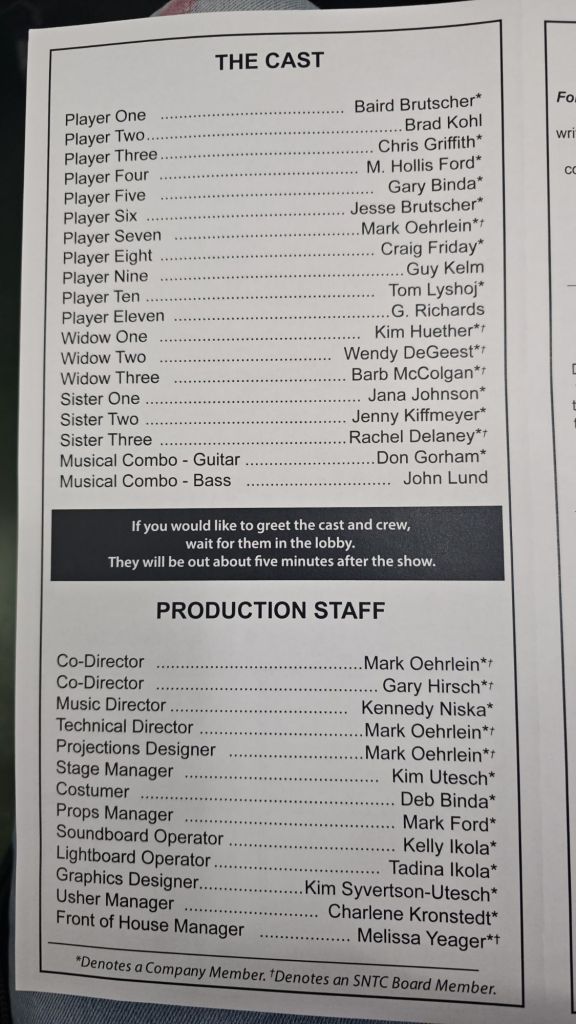
10 NOVEMBER plays through Monday, November 10th at the Franklin Arts Center in Brainerd
 Friends and Neighbors
Leave a comment